Reflex & Balance Training: Move Better & Stay Safer
Every time you navigate an icy slope, dodge a mogul field, or hold a tight carve on steep terrain, your nervous system is working overtime. Balance and reflex responses fire in fractions of a second — long before your conscious mind has had a chance to weigh in. For recreational skiers and competitive mountain athletes alike, training those systems deliberately is one of the highest-return investments you can make. It does not just make you a better athlete; it makes the mountain a safer, more enjoyable place to be.
How Balance Control Actually Works
Balance is not a single sense — it is a continuous conversation between three systems. Your vestibular system, housed in the inner ear, detects head position and movement. Your visual system anchors you to the environment around you. And your proprioceptive system — a network of receptors embedded in muscles, tendons, and joints — feeds the brain a constant stream of data about limb position and ground-contact forces. The brain synthesises all three inputs and issues micro-corrections through the motor system, often completing the entire feedback loop in under 100 milliseconds. When one system is disrupted — by fatigue, low light, unfamiliar terrain, or injury — the others must compensate. The stronger and more practised all three channels are, the more seamlessly that compensation happens.
Why Reflexes Are Central to Sport Performance
In almost every sport, the difference between a good outcome and a poor one is measured in milliseconds. A tennis player reading a serve, a goalkeeper reacting to a penalty, a snowboarder adjusting weight to absorb an unexpected roll in the piste — all of these demand reflexive, pre-conscious movement. Reflexes are not simply fixed biological traits. They are trainable neural pathways. Consistent, targeted practice builds faster signal transmission, reduces reaction latency, and improves the quality of the motor response itself. Athletes who invest in reflex training do not just react faster; they react more accurately and with better economy of movement, leaving more energy in reserve for the next challenge.
The Stakes Are Higher in Mountain Sports
Skiing and snowboarding operate in an environment that is actively unpredictable. Gradient, snow density, visibility, and temperature can all change within a single run. A misjudged edge at speed, a hidden patch of ice, or a sudden compression can send forces through the body that the athlete has only a split second to manage. The physical consequences of getting it wrong — ligament damage, fractures, head injuries — are real and serious. This is not a reason to avoid the mountain; it is a compelling reason to prepare the body's reactive systems before stepping onto it. Athletes who arrive with well-trained balance and reflexes are not just faster — they are measurably safer, because their bodies can self-correct from near-falls and absorb unexpected forces before those forces become injuries.
How Targeted Training Reduces Risk and Builds Confidence
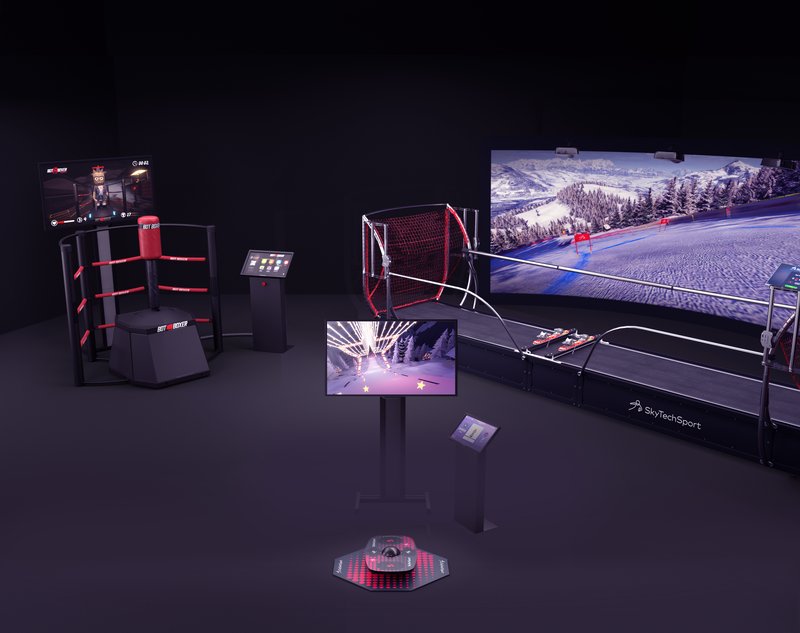
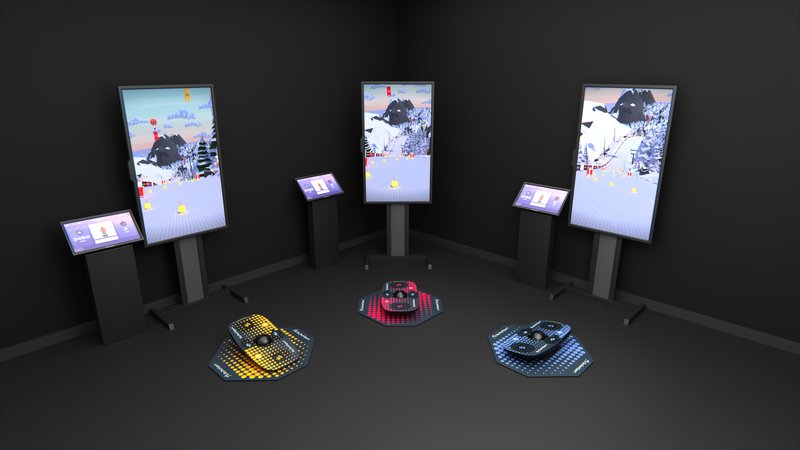
Effective balance and reflex training works on several levels simultaneously. Proprioceptive drills — single-leg stances, unstable surface work, reactive stepping patterns — rewire the nervous system to handle perturbations more efficiently. Coordination exercises that require rapid weight transfer mirror the demands of skiing and snowboarding, building sport-specific neural patterns that activate automatically when needed on the mountain. Equipment like the SkyTechSport BalancePlay Pro is designed precisely for this kind of neuromotor conditioning, providing a dynamic, sensor-driven platform that challenges balance in real time and gives athletes immediate feedback on their postural control. Similarly, the BotBoxer reactive training system develops hand-eye coordination and whole-body reflex speed in a way that transfers across virtually every reactive sport. When these capacities are well-developed, athletes report feeling noticeably more in control and comfortable in testing situations — less rigid with fear, more fluid in response. That psychological shift is itself protective, because tension and hesitation are among the most common contributors to falls and collisions.
Balance Training Beyond Sport: Quality of Life
The benefits of balance and reflex training extend well beyond athletic performance. Postural control underpins almost every functional movement in daily life — walking on uneven ground, catching yourself on a slippery step, carrying an awkward load. Research consistently shows that individuals with better balance control recover more quickly from stumbles, experience lower rates of fall-related injuries, and report higher levels of physical confidence in everyday situations. For older athletes returning to skiing or snowboarding after a break, this functional dimension is especially meaningful. Training the nervous system is not a young athlete's luxury; it is a lifelong investment in mobility, independence, and the ability to keep doing the things you love.
Getting Started: Making Balance and Reflex Work Part of Your Routine
The most effective approach integrates balance and reflex work into a broader training programme rather than treating it as an afterthought. Begin with progressively more challenging static and dynamic balance tasks, then layer in reactive elements — unpredictable perturbations, dual-task demands, sport-specific movement patterns. Simulator-based training, such as sessions on a SkyTechSport ski or snowboard simulator, is particularly valuable because it replicates the movement mechanics and balance demands of real on-snow performance in a controlled, repeatable setting. This means athletes can log meaningful training volume even outside the ski season, arriving at the mountain with neuromuscular systems that are already calibrated for the demands ahead. Whether you are preparing for your first season, returning from injury, or looking to sharpen performance at an elite level, consistent work on balance and reflexes pays dividends every single run.
Train Smarter Before You Hit the Mountain
Get in touch to find the right SkyTechSport training solution for your goals and ability level.
Discovery SkyTech Sport →