How Technology Is Transforming Sports in 2026
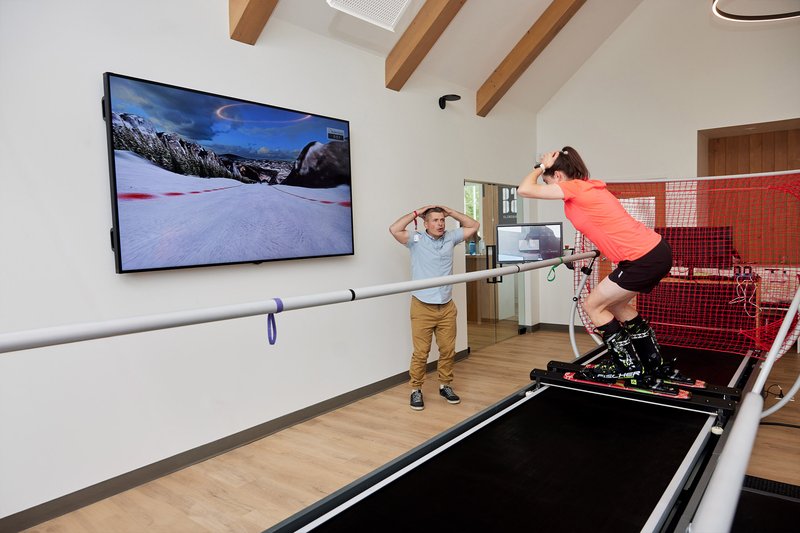
Sport has always been a proving ground for human ingenuity, but 2026 feels like a genuine inflection point. The gap between professional-grade technology and what everyday athletes and fans can access has never been smaller. Smartwatches now monitor recovery at a cellular level, broadcast trucks beam holographic replays to your living room, and indoor training facilities use motion-capture simulators to put athletes on world-class slopes without leaving the city. Whether you coach a youth football team or you're chasing a personal best on the mountain, the tools available to you today would have seemed science-fiction a decade ago.
Smartwatches: Your Wrist Is Now a Performance Lab
The latest generation of sports smartwatches has moved well beyond step counting and heart rate. Devices released in 2025 and 2026 now include continuous lactate-threshold estimation, skin-temperature trending, blood-oxygen saturation tracking, and readiness scores built on machine-learning models trained on millions of athlete sessions. Brands are integrating these metrics directly with coaching apps, so a ski racer can wake up on race morning and receive a data-backed recommendation on whether to push hard in training or dial back intensity to peak on competition day. The accuracy of GPS has also improved dramatically — multi-band receivers now lock onto satellite constellations with sub-metre precision, which matters enormously for alpine athletes trying to compare run lines through tight gates.
Next-Gen Stats Are Changing How We Watch Football
The NFL's Next Gen Stats platform, powered by player-tracking chips embedded in shoulder pads and the ball itself, has matured into something that fundamentally changes the broadcast experience. Viewers watching on streaming platforms in 2026 can toggle an augmented-reality overlay that shows every receiver's route in real time, a quarterback's throw speed, and a defender's closing distance — all rendered in less than a second of latency. Similar systems are rolling out across the Premier League, NBA, and international rugby, giving broadcasters data layers that were once available only to coaching staff. For fans, it turns passive watching into something closer to active analysis. For coaches, the same data pipelines feed preparation tools that compress hours of film study into minutes of AI-curated insight.
AI Coaching: Personalised Feedback at Scale
Artificial intelligence is bridging the gap between elite coaching and mass participation. Computer-vision systems can now analyse a snowboarder's stance, weight distribution, and edge pressure from a standard video feed and return corrective cues in under ten seconds. Boxing training has seen similar disruption — reactive systems like the BotBoxer smart punching bag use sensor arrays and adaptive algorithms to mirror an opponent's tendencies, track punch speed and accuracy, and adjust difficulty in real time, giving fighters a genuinely intelligent sparring partner available any hour of the day. The democratisation here is profound: a club-level athlete in a mid-sized town can access feedback quality that would previously have required a specialist coach and an expensive motion-capture lab.
Sports Simulators: Bringing the Mountain to the City
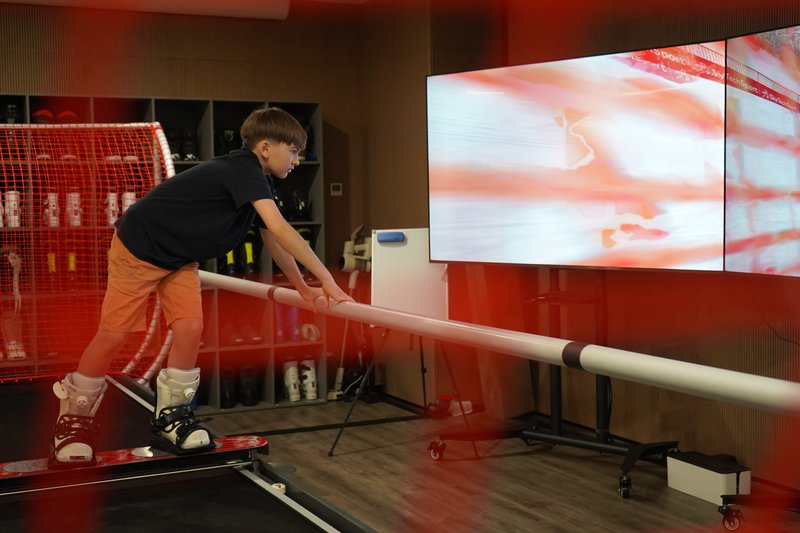
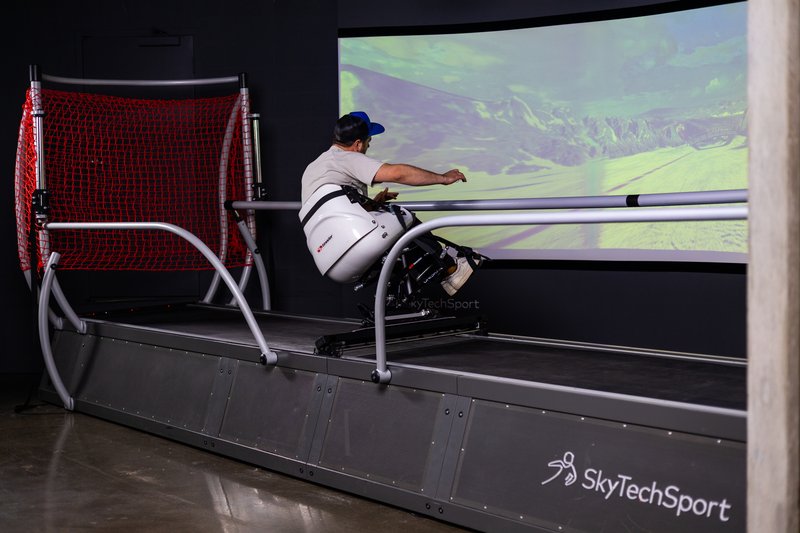
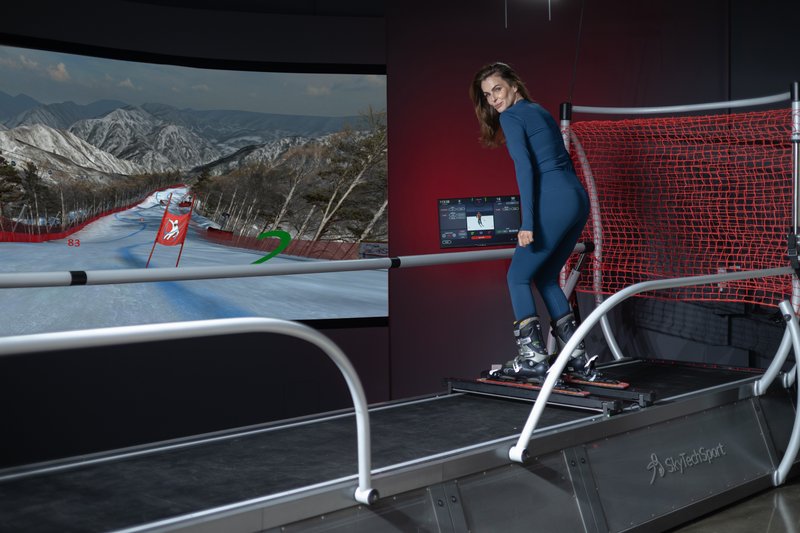
Perhaps nowhere is the convergence of hardware, software, and sports science more visible than in the simulator space. Modern ski and snowboard simulators use high-resolution motion platforms, real-time terrain rendering, and force-plate binding systems to replicate the biomechanical demands of skiing and riding with a fidelity that translates directly to on-snow performance. At Home Mountain Ski Club, athletes use these systems year-round to work on specific technical weaknesses — carving timing, mogul absorption, gate-turn efficiency — without the cost and logistics of travelling to a resort. Facilities that invest in ski simulator training are seeing measurable improvements in athlete readiness at the start of the season, and for beginners, the simulator offers a safe, pressure-free environment to learn fundamental movements before ever clicking into bindings on a real slope.
Balance technology is another area where the simulator world is making serious inroads. Tools like the BalancePlay Pro train proprioception — the body's sense of position and movement — which underpins performance in virtually every sport, from alpine skiing to football to martial arts. By quantifying balance in real time and providing guided progression, these platforms close a training gap that traditional gym work has always struggled to address.
The Fan Experience: Immersive, Interactive, and Everywhere
Technology is not only changing how athletes perform — it is fundamentally reshaping how supporters engage with sport. Volumetric capture rigs at major stadia now produce broadcast-quality 3D replays that fans can rotate and zoom on their devices, replacing the flat slow-motion angle with something closer to being on the field. Fantasy sports platforms have integrated real-time tracking data so deeply that lineups can be adjusted based on live warmup metrics. And for combat sports fans, AI commentary systems can now describe in natural language what a fighter's punch output data suggests about their conditioning mid-bout. The sports arena and the living room are becoming the same place, mediated by data.
Where Sport and Technology Go From Here
The trajectory is clear: technology in sport will continue to compress the distance between professional insight and everyday access, between elite training environments and local clubs, and between watching a game and understanding it deeply. For athletes, that means richer feedback, smarter preparation, and training tools that adapt to individual needs rather than offering one-size-fits-all programmes. For fans, it means more ways to be genuinely close to the action regardless of geography. And for businesses and facilities building the infrastructure of sport — from gyms and academies to broadcast studios and training centres — investing in the right technology now is the difference between leading the next era and catching up to it.
Bring Cutting-Edge Training to Your Facility
Talk to our team about which SkyTechSport simulators and training systems are right for your athletes.
Explore Ski Simulators →