Best Dryland Drills Before Ski Season Starts
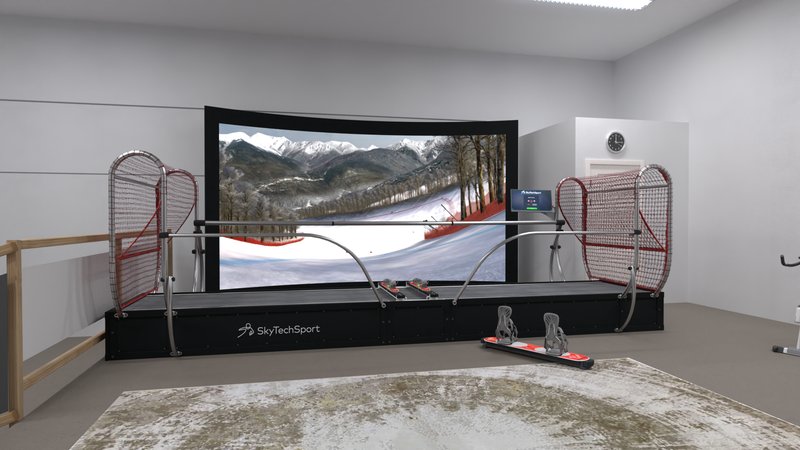
The lifts are weeks away, but your preparation starts right now. The best dryland drills before ski season close the gap between summer fitness and mountain-ready performance — helping you carve with confidence from the very first run rather than spending the first few days just finding your legs. Whether you're a weekend warrior or a seasoned racer, a structured pre-season routine protects your joints, sharpens your proprioception, and makes every day on the hill more enjoyable. Here's a practical guide to the drills that matter most, and how modern simulator technology can take your prep further than any gym session alone.
Why Dryland Training Matters More Than You Think
Skiing and snowboarding demand a unique combination of lower-body strength, lateral agility, core stability, and split-second balance adjustments. Spending months away from snow means these specific neuromuscular patterns fade — your body forgets the exact timing and coordination that skiing requires. Dryland drills rebuild those patterns on dry ground before you face icy moguls or steep groomed runs. Athletes who commit to six to eight weeks of targeted pre-season training consistently report fewer muscle soreness days at the start of the season and a lower rate of common knee and ankle injuries. The goal isn't just cardio fitness; it's building the precise movement vocabulary that skiing demands.
Lower-Body Strength: The Foundation of Every Turn
Wall sits are a deceptively simple starting point. Hold a seated position against a wall — thighs parallel to the floor, knees at ninety degrees — for thirty to sixty seconds per set. Progressively increase hold time over your training weeks to build the sustained quad endurance that long groomer runs require. Bulgarian split squats are equally valuable: elevating your rear foot isolates each leg independently, ironing out the strength imbalances that cause skiers to favor one edge. Aim for three sets of ten to twelve reps per side. Lateral lunges round out the lower-body work by training the hip abductors and adductors that control edge-to-edge transitions — the exact movement you repeat hundreds of times on a single ski run.
Agility and Lateral Quickness Drills
Skiing is fundamentally a lateral sport, so linear gym machines only take you so far. Lateral band walks with a resistance loop around your ankles train the glute medius — a muscle that is chronically underactive in desk workers and directly responsible for knee tracking on every turn. Skater hops (bounding side to side on one leg and sticking the landing for two seconds before switching) mimic the weight transfer rhythm of short-radius carved turns and also develop single-leg landing strength critical for mogul skiing. Dot drills or agility ladder footwork rounds out agility training, improving foot speed and coordination that translate directly to reactive terrain adjustments. Run each agility drill for twenty to thirty seconds at high intensity with equal rest periods.
Core Stability: Your Hidden Performance Engine
A strong core isn't just about aesthetics — it's the stabilizing link between your lower body and upper body that prevents energy leaks in every turn. Anti-rotation exercises are particularly ski-relevant. The Pallof press (pushing a cable or band straight out from your chest while resisting rotational pull) trains the obliques to hold the athletic skiing stance under load. Dead bugs — lying on your back and extending opposite arm and leg while keeping your lower back pressed to the floor — build deep spinal stability without loading the spine. For snowboarders especially, plank variations with shoulder taps add the rotational challenge that toeside and heelside carving demands. Three sessions of core work per week, integrated into your lower-body training days, is a realistic and effective frequency.
Balance Training: Where Fitness Meets Ski Technique
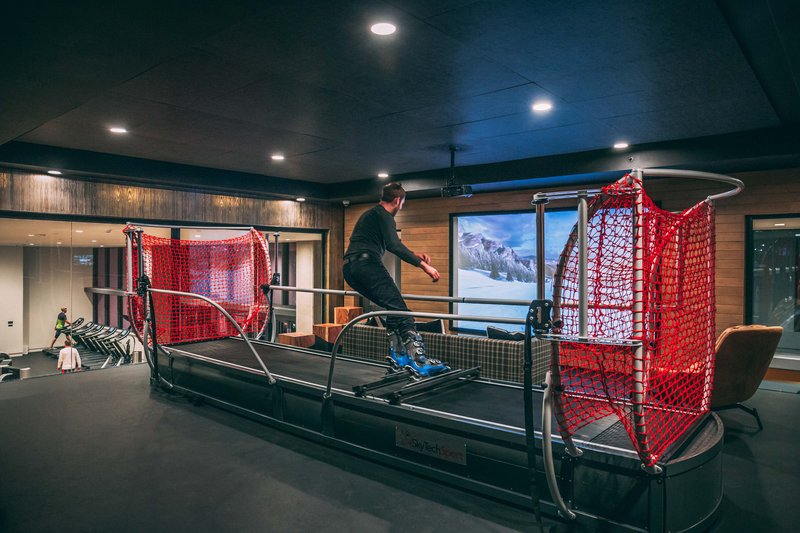
Balance drills are where dryland training starts to feel most like skiing. Single-leg stands on an unstable surface — a balance board, a folded yoga mat, or a foam pad — retrain the ankle, knee, and hip stabilizers to fire in the rapid, coordinated sequence skiing requires. Progress from eyes-open to eyes-closed single-leg balance to challenge your proprioceptive system further. For a more dynamic option, the SkyTechSport BalancePlay Pro offers real-time feedback on weight distribution and center-of-gravity shifts, making balance training measurable and progressive rather than guesswork. Knowing exactly how your weight distribution changes under fatigue gives you actionable data to improve — something a foam pad alone cannot provide.
Simulator Training: Bridging Dryland and the Real Mountain
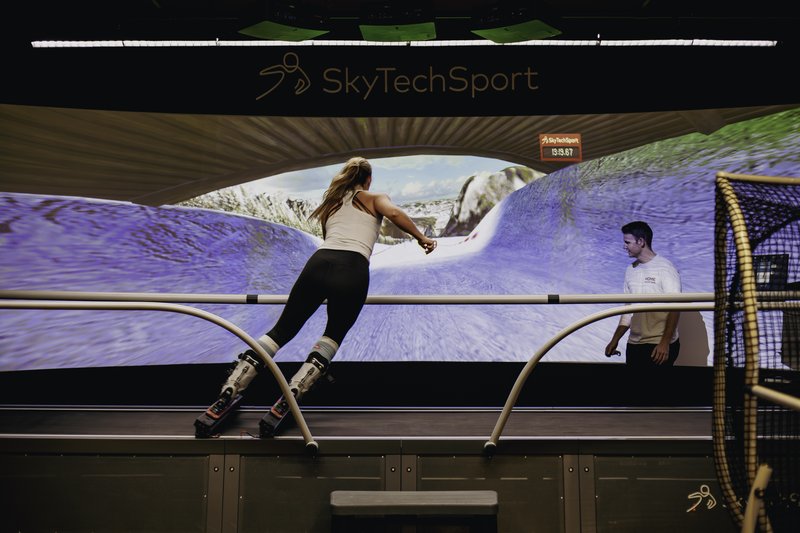
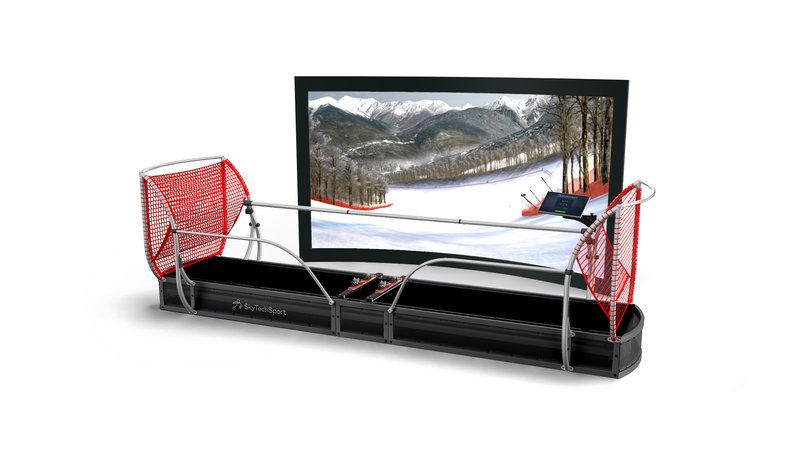
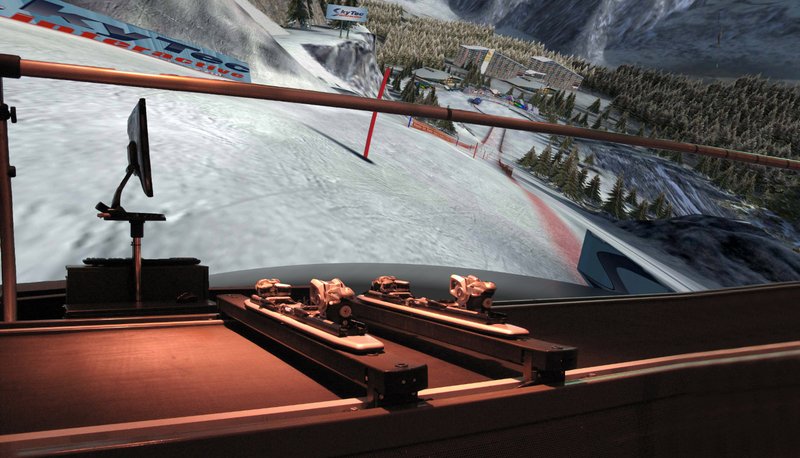
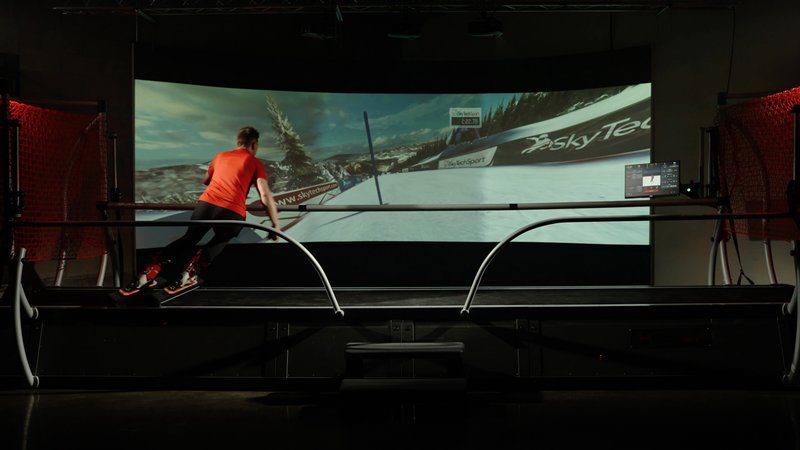
Dryland drills build the physical foundation, but they cannot fully replicate the sensation of a ski boot on an edge, the flex of a ski under load, or the visual flow of a course rushing toward you. That's the gap that ski and snowboard simulators fill. SkyTechSport's ski and snowboard simulators let athletes practice technically correct movement patterns — angulation, edge pressure, pole timing — on a moving surface that responds dynamically to their input. Instructors and coaches can observe technique in real time, provide cues, and adjust difficulty, making simulator sessions an effective bridge between the gym and the hill. Combining six weeks of the dryland drills outlined above with regular simulator sessions gives you both the physical capacity and the technical sharpness to perform from day one of the season.
Putting It All Together: Your Pre-Season Schedule
A practical eight-week pre-season block might look like this: three days per week of lower-body strength and core work, two days of agility and balance training, and one simulator session per week to apply your fitness gains to actual skiing movement. Allow at least one full rest day. In weeks one and two, focus on building movement quality over intensity — get the patterns right before loading them. Weeks three through five increase volume and resistance. Weeks six through eight shift toward power and sport-specificity, reducing total gym volume slightly and increasing simulator time. By the time the first snowfall arrives, your body won't need a week of soreness and adaptation — you'll be ready to ski at your actual ability level from the opening day.
Start Your Pre-Season Training Today
Explore SkyTechSport simulators and training tools to get mountain-ready before the season opens.
Explore Ski Simulators →