Balance & Reflex Training: Why It Matters in Sport and Everyday Life
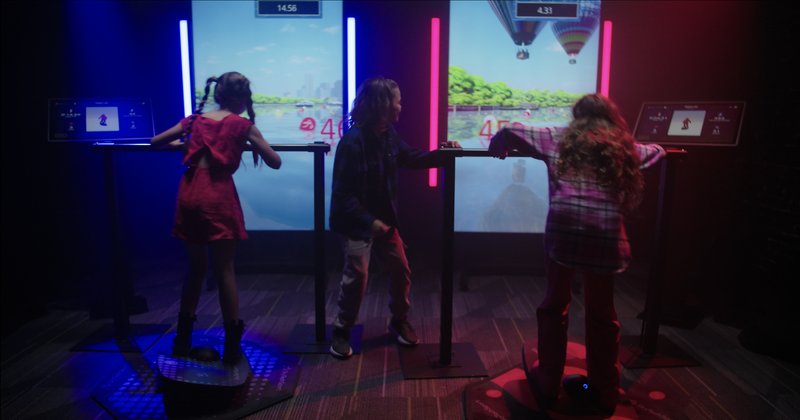
Think about the last time you stumbled on an uneven pavement and caught yourself before falling, or instinctively swerved your shopping trolley to avoid a child running around the corner. Those split-second recoveries were not luck — they were the product of your balance system and reflexes working together. The good news is that both are trainable, and improving them pays dividends whether you are carving down a mountain, playing five-a-side football, or simply navigating the unpredictable chaos of everyday life.
Why Balance and Reflexes Are the Hidden Foundation of Performance
Balance and reflexes are often overshadowed by flashier athletic qualities like strength or speed, yet they underpin almost every physical task we perform. Balance is controlled by three overlapping systems: your vestibular system (inner ear), your proprioceptive system (sensors in your muscles and joints telling you where your body is in space), and your visual system. Reflexes are the nervous system's rapid-fire response to unexpected stimuli — the neural highway that gets your body moving before your conscious brain has even registered the danger.
In sport, a skier absorbing a mogul field, a snowboarder adjusting mid-air, or a footballer pivoting to beat a tackle all rely on these systems firing in harmony. Off the slopes and off the pitch, the stakes can be even higher. Reacting to a car that suddenly swerves into your lane, grabbing a railing when you miss a step, or reaching quickly to catch something you have dropped — these are real-world scenarios where trained balance and reflexes can prevent serious injury. Research consistently shows that people who engage in regular balance and reflex training suffer fewer falls, recover faster from trips, and move with greater confidence at every age.
How SkyTechSport Simulators Accelerate Your Training
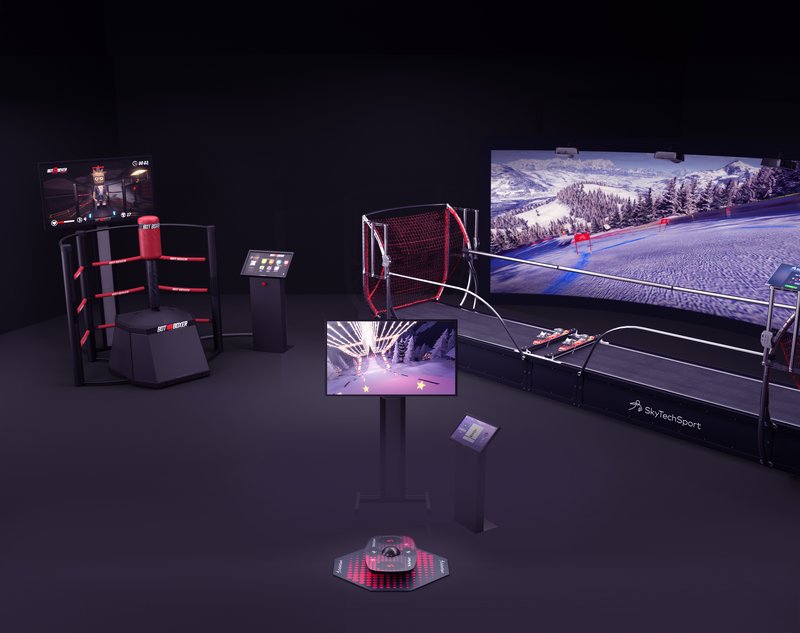
One of the most effective ways to train balance and reflexes is to place your body in a controlled, unpredictable environment that demands constant micro-adjustment — and that is precisely what SkyTechSport simulators are engineered to deliver. The ski and snowboard simulators replicate the shifting, dynamic surface of real snow, forcing your stabilising muscles, proprioceptors, and reaction pathways to work continuously throughout every session. Because the movement variables can be dialled up or down, beginners can build a solid foundation while seasoned athletes can push into genuinely challenging territory.
The BalancePlay Pro takes targeted balance training even further, providing real-time biofeedback so you can see exactly how your weight is distributed and how quickly you correct imbalances. This kind of objective data is difficult to replicate with traditional training alone. Meanwhile, BotBoxer — SkyTechSport's intelligent boxing robot — is a superb reflex and reaction trainer, launching combinations and requiring sharp, accurate responses that sharpen hand-eye coordination and reaction speed simultaneously. Together, these tools create a comprehensive balance-and-reflex training ecosystem that compresses progress significantly compared to conventional methods.
Practical Balance Drills You Can Do at Home
You do not need specialist equipment to start improving your balance today. The following drills require little more than a clear floor and a few minutes of focused effort.
Single-leg standing is the simplest starting point — stand on one foot for 30 to 60 seconds, then progress by closing your eyes, which removes visual input and forces your vestibular and proprioceptive systems to work harder. Heel-to-toe walking (imagine you are walking a tightrope) challenges dynamic balance in a way that normal walking never does. Wobble boards or balance cushions are inexpensive pieces of kit that introduce instability and closely mimic the proprioceptive demands of snow sports. Yoga and Pilates routines that incorporate single-leg poses, lateral lunges, and core holds are also excellent, as they combine balance challenges with the muscular control needed to sustain them over time. Aim for three short sessions per week — consistency matters far more than duration.
Reflex Training Away from the Simulator
Reflexes improve when the nervous system is repeatedly exposed to stimuli it must react to quickly and accurately. There are several practical ways to create that stimulus at home. Reaction ball drills — bouncing an irregularly shaped rubber ball against a wall and catching it as it rebounds unpredictably — are a favourite among athletes for good reason: the ball's erratic trajectory means your reaction system never gets to anticipate the movement. Catching a standard tennis ball dropped from shoulder height by a training partner is another low-tech but effective drill.
Agility ladder exercises, even done slowly at first, train your brain to sequence rapid foot movements and then gradually build the speed of that sequencing. Video-game style reaction apps and online reflex timers are surprisingly useful for measuring and improving visual reaction speed — they are not a gimmick if used consistently and progressively. Martial arts and racket sports (tennis, squash, badminton, table tennis) are among the best recreational activities for reflex development because they integrate reaction, decision-making, and movement all at once. Even juggling — starting with two balls — is a well-documented method for improving hand-eye coordination and neural response speed.
Building a Balanced Routine: Combining Home Work with Simulator Sessions
The most effective approach is to treat home drills and simulator sessions as complementary rather than competing. Your at-home balance and reflex work lays the neural groundwork — reinforcing the pathways, strengthening the stabilising muscles, and building body awareness. Simulator sessions on the ski and snowboard simulators or BalancePlay Pro then apply that groundwork under load, adding speed, complexity, and sport-specific movement patterns that accelerate real-world gains. Think of it as the difference between practising scales on the piano at home and then performing in a live setting — both are essential to genuine progress.
A sensible weekly structure might look like this: two to three short home sessions of balance and reflex drills (15 to 20 minutes each), combined with one or two simulator sessions when available. Track your progress — how long you can hold a single-leg balance, your reaction time scores, how stable you feel on the simulator — so that improvement is visible and motivating. Consistency over weeks and months is what drives lasting neurological adaptation. The body becomes what it practises, and a nervous system trained to react quickly and balance efficiently will serve you not just in sport, but in every physical moment of your life.
It Is Never Too Early or Too Late to Start
Children who engage in balance and coordination training develop motor skills faster and build a physical confidence that carries through to adulthood. Adults who train these qualities maintain them into later life, reducing the risk of falls — one of the leading causes of injury and loss of independence in older age. Whether you are a junior athlete looking to gain a competitive edge, a recreational skier wanting to feel more secure on the mountain, or someone who simply wants to move through the world with greater ease and safety, balance and reflex training is one of the highest-return investments you can make in your physical health.
Ready to Train Smarter?
Explore our simulators and find the right training solution for your goals.
Discover Our Simulator Line Up →