The 2026 Ski Tech Landscape: Where Gear Innovation Ends and Training Innovation Begins
Every autumn, the ski industry's innovation conversation lights up with new hardware. This year is no different. Smart goggle displays with real-time speed and navigation overlays, airbag vests that deploy in a fraction of a second, BOA-system closure boots that micro-tune flex and fit mid-run, and ski constructions so light they feel like a different category of equipment — it's a genuinely impressive list. If you follow the gear press, 2026 reads like a golden era of skier protection and comfort. And it is. But that coverage captures roughly half the story.
The Visible Half: What You Wear and Ride
The headline product launches of 2026 share a common philosophy: make the skier safer, warmer, lighter, or more comfortable on the hill. Smart goggles reduce the cognitive load of navigation. Airbag vests lower the stakes of a bad fall. BOA closure systems on high-end boots let athletes dial in flex and volume more precisely than any traditional buckle system. Next-generation ski cores and bindings shave grams without sacrificing torsional rigidity. These are real, meaningful advances — and for recreational skiers, they represent genuine quality-of-life improvements. But here is the honest limitation of every item on that list: none of them teach you to ski better. They equip you. They protect you. They optimize the interface between your body and the mountain. What they do not do is identify why your weight is late in a turn, correct your edging angle at high speed, or tell you that your fore-aft balance is costing you two seconds on a race course. For that, the industry has turned to a different category of technology entirely.
The Invisible Half: Sensors, Data, and Biomechanics Analytics
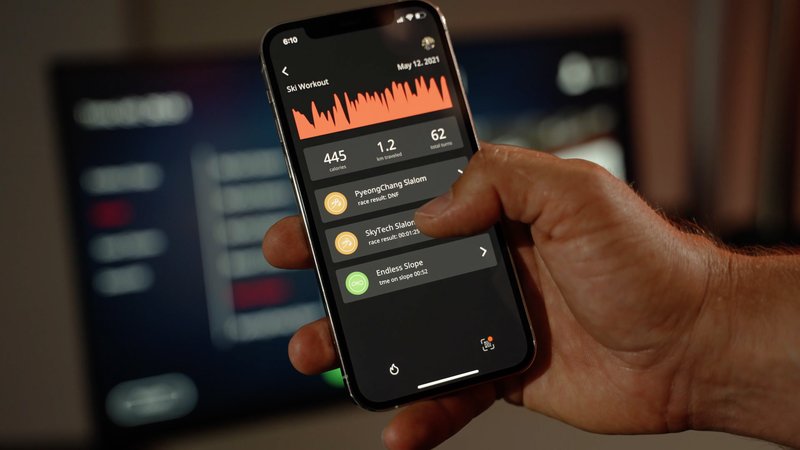
Underneath the gear headlines, a quieter and arguably more consequential shift is underway. Sensor platforms like Carv — pressure-mapping insoles that capture hundreds of data points per second on edge angle, balance point, and turn symmetry — are now being used not just by curious recreational skiers but by coaches building session-by-session training records for their athletes. Snowcookie's wearable motion sensors attach to boots and helmet and feed into a coaching dashboard that flags technique deviations in near real time. At the elite end of the data spectrum, USA Bobsled partnered with Snowflake to run AI-driven analysis on athlete performance data, a model increasingly being explored across sliding and alpine disciplines. Sports performance analytics company KINEXON, long established in team sports, has been expanding into winter sports contexts, bringing sub-centimeter spatial tracking into training environments. What all of these platforms have in common is a shift in focus from what the athlete is wearing to what the athlete's body is actually doing — and, critically, what it should be doing differently.
Why Measurement Alone Isn't Enough
Here is the gap that sensor technology, for all its sophistication, has not yet closed on its own. Carv can tell a skier that their weight is consistently back in the transition between turns. Snowcookie can flag that their edge angles are asymmetric. But the mountain — with its variable snow conditions, temperature, pitch, and traffic — is a chaotic training environment. You cannot isolate a single variable. You cannot repeat the exact same turn thirty times under controlled conditions. You cannot safely practice the high-load edge engagement of a giant slalom turn when you are a developing racer or a coach-led adult working through a technical flaw. Measurement without a controlled environment to act on those measurements has a ceiling. This is where the category of indoor ski training simulators enters the conversation, and why it fits naturally alongside — not in competition with — the sensor and analytics platforms that elite programs are adopting.
Simulators as the Controlled Environment Biomechanics Needs
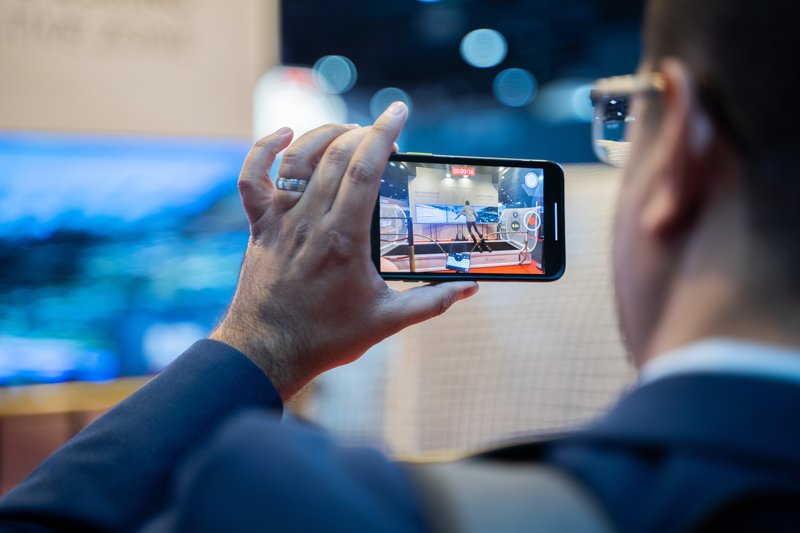
SkyTechSport's ski and snowboard simulators are purpose-built for exactly the training gap that sensor data has made visible. The platform replicates the biomechanical demands of on-snow skiing — edge pressure, weight transfer, fore-aft balance, rotational forces — within a controlled environment where conditions are consistent, repeatable, and adjustable. Coaches and athletes can isolate specific movement patterns, set difficulty parameters, and run the same scenario dozens of times in a single session without weather, fatigue from traversing a mountain, or unpredictable snow surface interfering with the training signal. The biomechanics these systems train — edging angles, dynamic balance, pressure management through the ski — are precisely the variables that Carv insoles are measuring on snow and that AI coaching platforms are now flagging for correction. A skier who uses a sensor platform to identify a technical weakness can use simulator sessions to drill the corrective movement pattern in a low-risk, high-repetition environment, then return to sensor-monitored on-snow skiing to verify improvement. The loop closes.
Elite Validation: This Is Already How Top Programs Train
It is worth being direct about one thing: the positioning of ski simulators as a serious training tool is not speculative. The US Ski Team's Center of Excellence has conducted lactate threshold testing protocols using SkyTechSport simulators, validating the platform as a physiologically legitimate training stimulus — not a recreational novelty. Breezy Johnson, one of the most decorated American alpine racers of her generation, has incorporated SkyTechSport simulator work into her training. These are not marketing anecdotes; they represent the kind of sports-science-grounded, elite-level adoption that typically precedes broader integration across competitive and developmental programs. When a tool earns a place in a program built around marginal gains and evidence-based methodology, it has passed a meaningful bar. The 2026 ski tech landscape is, at its most interesting, a story about the convergence of measurement and training. Gear innovation remains valuable — but the frontier is increasingly about understanding and correcting what the body does, not just clothing it better. SkyTechSport simulators sit at that frontier, offering a controlled, repeatable, sports-science-grounded environment for the biomechanics work that elite programs are now quantifying with greater precision than ever before.
What This Means for Clubs, Academies, and Serious Skiers
The implication for ski programs below the World Cup level is straightforward. If elite teams are investing in biomechanics analytics and controlled-environment training as complementary tools, the same logic applies to race academies, ski schools, and development programs operating on tighter budgets and shorter seasonal windows. Year-round simulator access means athletes are not losing neuromuscular conditioning and technical sharpness during the off-season. Coaches gain a structured environment to work on movement patterns that are difficult to isolate on snow. And facilities gain a programming tool that extends their relevance and service offering well beyond winter months. The 2026 gear story will be written mostly about what skiers are putting on. The more durable story — the one that will define how the sport develops athletes over the next decade — is about what happens when measurement, data, and controlled-environment training finally work together.
See How Simulator Training Fits Your Program
Talk to our team about integrating SkyTechSport simulators into your training or facility year-round.
Explore Ski Simulators Near You →