Guide
How to Improve Your Reaction Time
Reaction time isn't fixed — it's a skill you can train. Here are the most effective, science-based exercises for faster reactions and reflexes, from drills you can do at home to the reaction technology elite athletes use.
Can you really improve your reaction time?
Yes. Reaction time is the gap between perceiving something and responding to it — see the cue, decide, move. Each of those steps gets faster with practice, which is why athletes in fast sports train reactions deliberately rather than hoping they're "born quick."
The principle that makes training work: respond to unpredictable cues, as fast as you can, over and over. Scripted, predictable movements barely move the needle — randomness is what forces the perception-decision-response loop to speed up.
Best exercises to improve reaction time
Reaction-light & target drills
Respond to randomly triggered lights or targets as fast as you can. Unpredictable cues train the perception-to-response loop directly — the single most specific way to get faster.
Reaction ball & ball-drop catches
A bounced reaction ball or a partner-dropped ball forces a fast, unplanned movement. Cheap, effective, and easy to do at home.
Sport-specific reactive drills
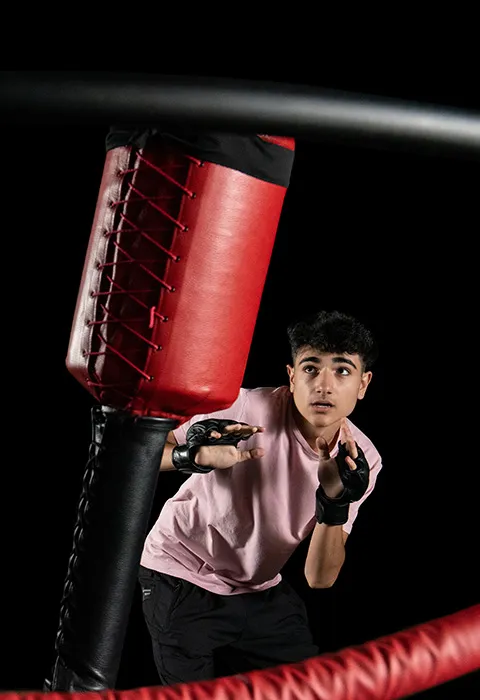
Defend a punch, return a serve, react to a feint. Reaction time is partly skill-specific, so practising reactions in your sport's movements transfers best.
Cognitive & dual-task training
Choice-reaction games and dual-task drills sharpen the decision step between seeing a cue and moving — useful when several responses are possible.
Whatever the drill, the rules are the same: keep the cue unpredictable, go at full speed, and measure your times so you can see progress.
Train reaction time with technology
Reaction-training technology takes the same principles further: it generates truly random cues, demands a fast physical response, and measures your reaction time on every rep so you can track improvement objectively.
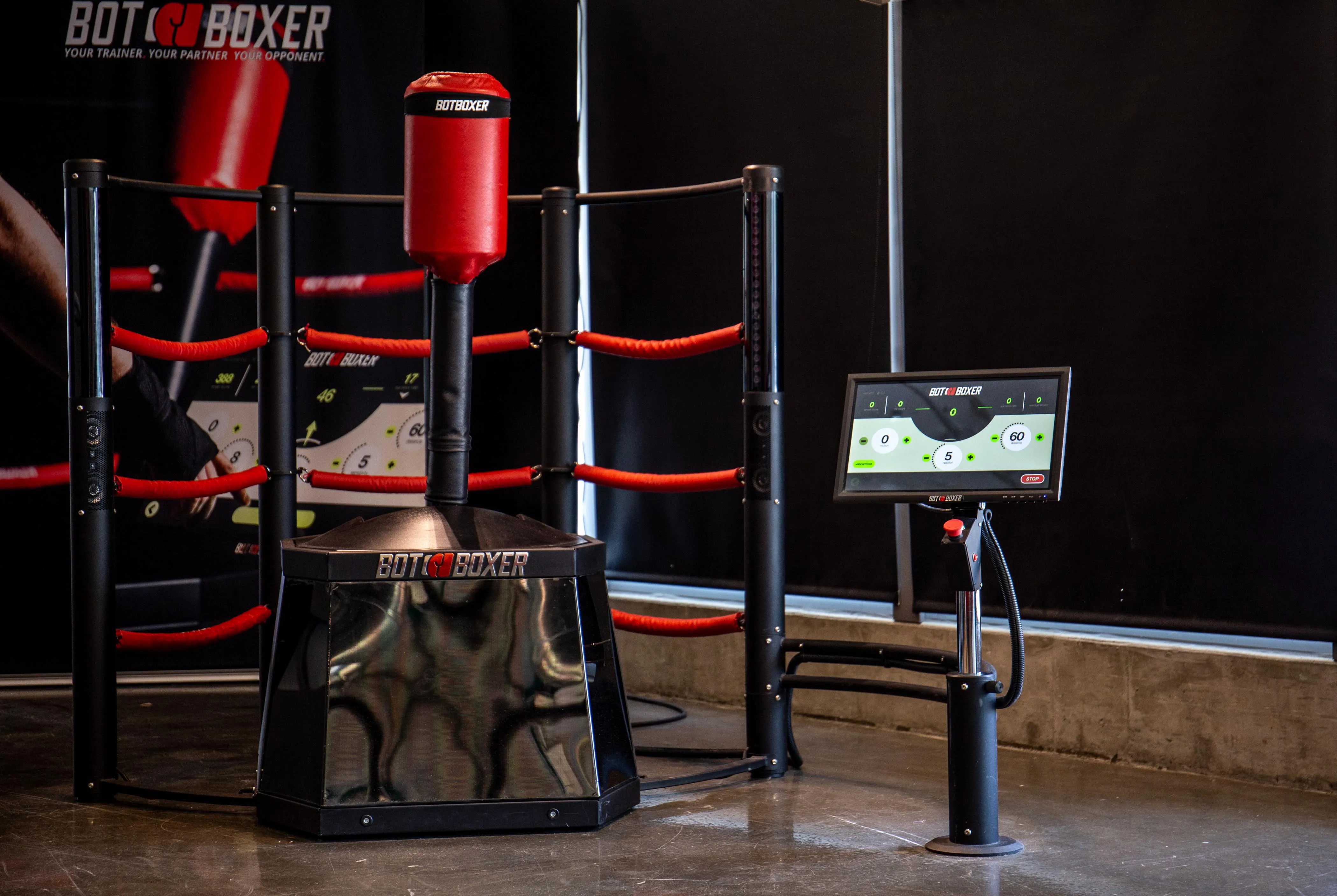
- BotBoxer — a smart boxing trainer that lights up unpredictable targets and tracks your reaction speed, power and accuracy.
- Ski simulators — train reactive balance and timing under realistic load, the reflexes skiers and racers rely on.
See a reaction trainer in action
Book a live or virtual demo and try reaction-based training for yourself.
Book a demo