Why Are Moguls So Hard to Ski? (And How to Get Better at Them)
For many skiers, moguls are one of the most intimidating types of terrain on the mountain. Even experienced skiers often ask the same question: why are moguls so hard to ski?
If you’ve ever found yourself struggling to maintain control, getting thrown into the backseat, or feeling completely exhausted after a mogul run, you’re not alone. Mogul skiing requires a unique combination of balance, timing, technique, and quick reactions that can take time to develop.
The good news is that once you understand why moguls are challenging and how to approach them correctly, they become much more manageable—and even enjoyable.
Below we’ll break down why moguls are difficult to ski and how you can improve your mogul technique.
What Are Moguls?
Moguls are the bumps that form naturally on ski slopes after many skiers make repeated turns in the same area. Over time, snow piles up between turns and forms a series of mounds and troughs down the slope. Unlike groomed runs where the snow is smooth and predictable, moguls create a constantly changing surface that requires skiers to adapt quickly. Each bump forces you to make adjustments to your balance, speed, and turn timing.
Why Moguls Are Difficult to Ski
Several factors make mogul skiing more challenging than skiing groomed terrain.
Constant Terrain Changes
On a groomed slope, the surface is relatively smooth. Moguls, on the other hand, create continuous terrain variation. As you ski through bumps, your legs must absorb each rise and drop while maintaining control of your skis. This requires strong leg muscles and excellent balance.
Faster Turn Timing
Moguls require much quicker turns than normal skiing. Instead of long carving turns, mogul skiing involves rapid direction changes that help control speed and maintain rhythm through the bumps. Skiers who struggle with moguls often wait too long to start their next turn.
Balance Challenges
Moguls constantly shift your center of mass. If your balance isn’t centered over your skis, bumps can easily push you into the backseat. Maintaining a centered stance is essential for controlling your skis in uneven terrain. This is one reason instructors emphasize balance training for skiers who want to improve in moguls.
Leg Strength and Endurance
Mogul skiing is physically demanding. Your legs must repeatedly absorb the impact of each bump while maintaining control of your skis. This constant flexing and extending of the legs can quickly fatigue even strong skiers. The familiar burning sensation in your thighs often appears quickly in mogul fields because of the intense muscular effort required.
How to Get Better at Skiing Moguls
Improving your mogul skiing doesn’t happen overnight, but focusing on a few key techniques can make a huge difference.
Stay Centered Over Your Skis
Balance is critical in mogul skiing. Focus on maintaining an athletic stance with your weight centered over the middle of your skis. If your hips drop behind your feet, the bumps will push you further into the backseat and make turns more difficult. Keeping your hands forward and your upper body stable helps maintain proper balance.
Look Ahead, Not at Your Skis
Many skiers look directly at the bumps in front of them. This often causes delayed reactions and poor turn timing Instead, try to look several bumps ahead and anticipate where your next turn will happen. This helps your body react more smoothly and maintain rhythm through the mogul field.
Use the Tops of the Moguls to Turn
A common mogul skiing strategy is to initiate turns near the top of each bump. Turning near the crest of the mogul helps control speed and keeps your skis moving down the fall line rather than accelerating too quickly. This technique is often taught by instructors because it naturally slows the skier while maintaining rhythm.
Absorb the Bumps with Your Legs
Your legs act like suspension when skiing moguls. As you approach a bump, flex your knees and ankles to absorb the rise. As you move into the trough, extend your legs slightly to maintain contact with the snow. This constant flexion and extension helps maintain stability and control.
Practice Balance and Ski-Specific Movement
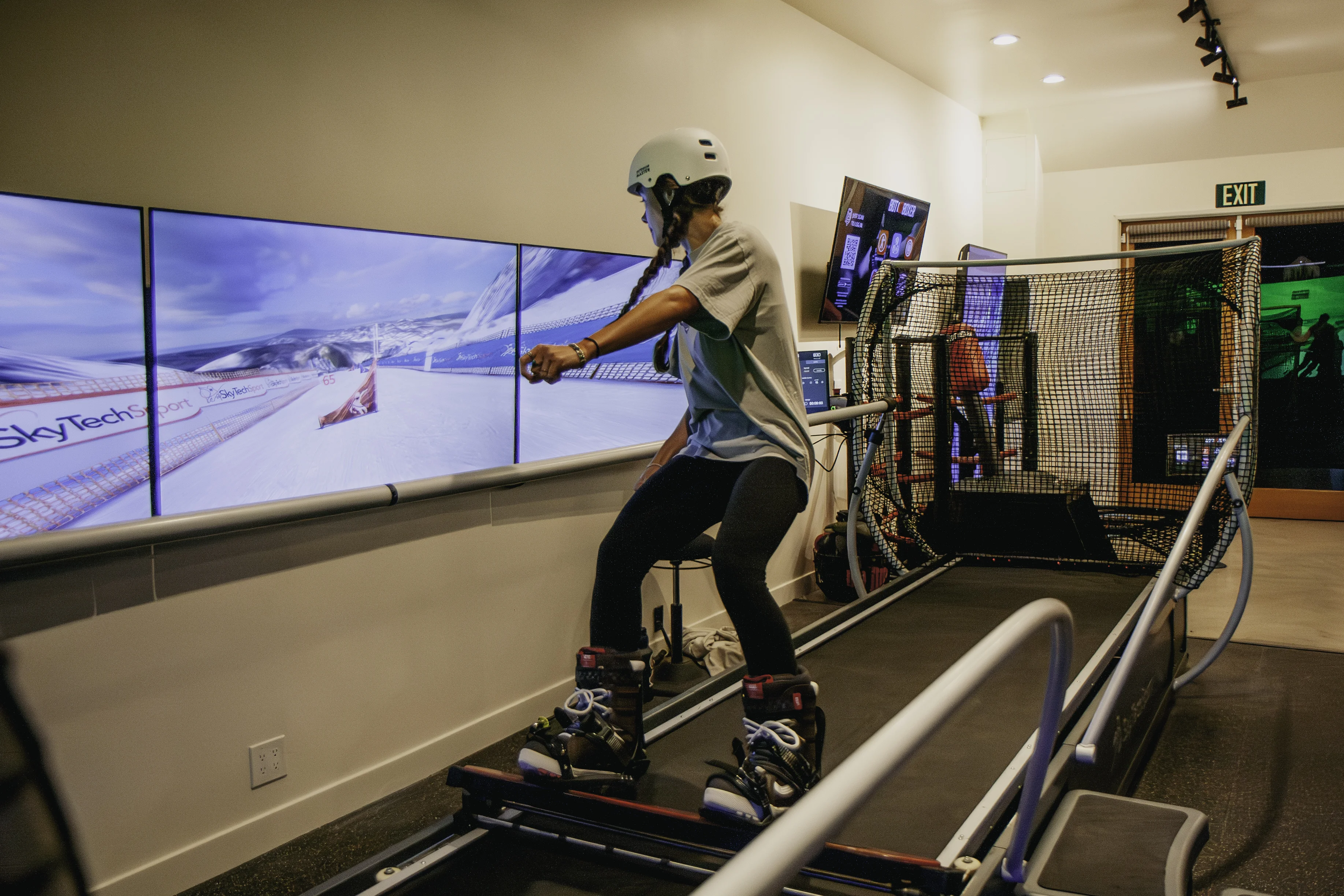
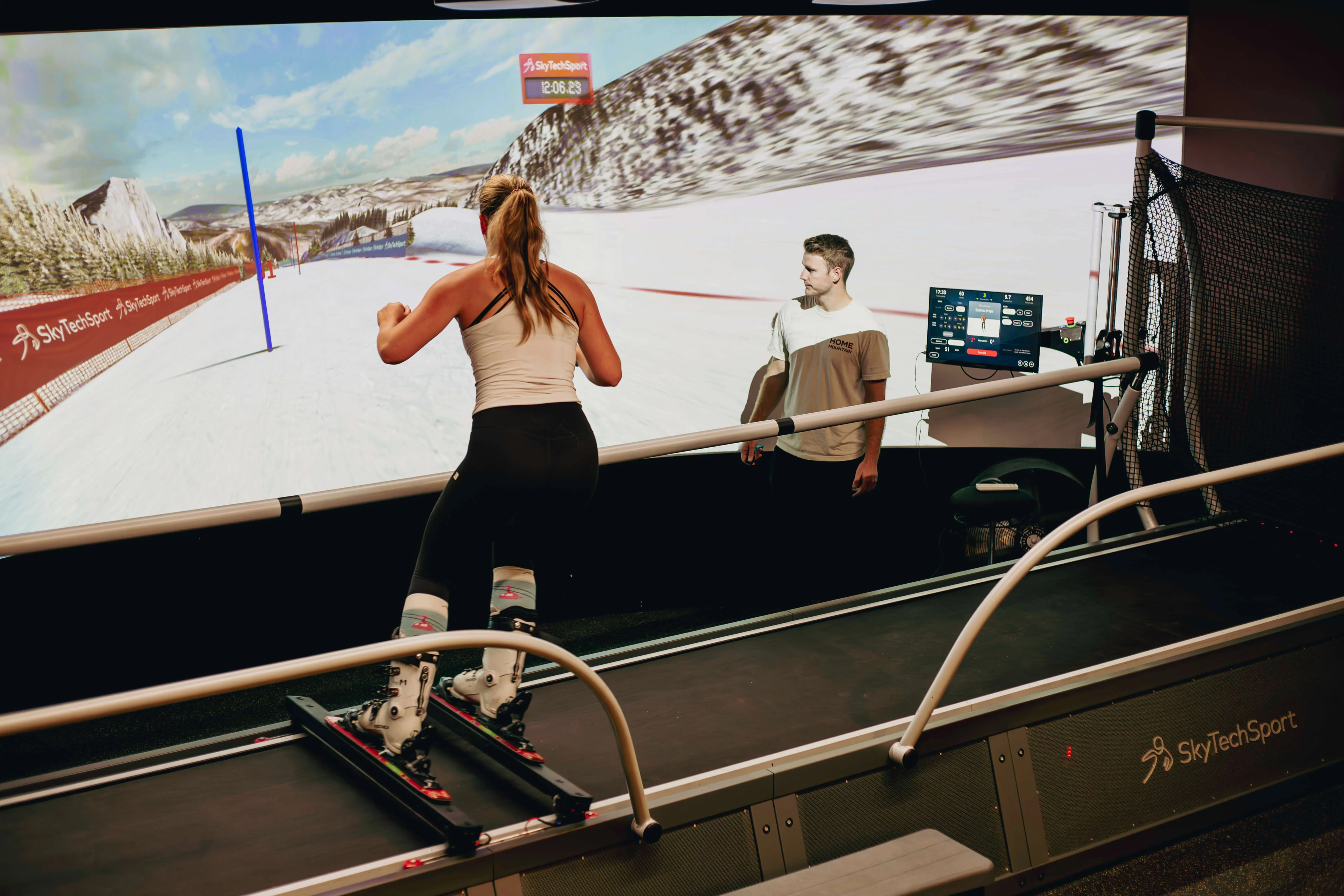
Because mogul skiing relies heavily on balance and quick reactions, off-snow training can help skiers improve their ability to handle uneven terrain. Some skiers practice ski-specific movement patterns indoors using tools designed to replicate skiing mechanics. For example, the SkyTechSport Ski Simulator allows skiers to train edging, pressure control, and balance while repeating skiing movements many times in a controlled environment. Practicing these movements repeatedly can help develop the coordination and stability needed for challenging terrain like moguls.
Start with Smaller Moguls
If you’re new to mogul skiing, don’t start with the steepest bump run on the mountain.
Instead, look for:
- Smaller bumps on easier runs
- Moguls on moderate slopes
- Sections of bumps where you can enter and exit easily
This allows you to practice the rhythm and technique without feeling overwhelmed. As your confidence improves, you can gradually move to steeper or more technical mogul runs.
Final Thoughts
Moguls are challenging because they demand more from a skier than smooth groomed terrain. They require quick turns, strong balance, and the ability to absorb constantly changing terrain. However, with the right technique and practice, mogul skiing becomes far more manageable—and even one of the most rewarding skills to develop. By focusing on balance, staying centered, and improving your turn timing, you’ll gain more confidence navigating bumps and difficult terrain. Over time, moguls can transform from one of the most intimidating parts of the mountain into one of the most fun.