Why Do Skiers Lean Back? How to Fix the Backseat Position

One of the most common problems instructors see on the mountain is skiers leaning back while skiing, often called skiing in the “backseat.”
If you’ve ever felt like your skis are running away from you, your legs are burning quickly, or you struggle to control turns, there’s a good chance your stance has shifted too far back.
Many people search “why do skiers lean back?” or “how to stop skiing in the backseat.” The good news is that this issue is very common and, with the right adjustments, it’s also very fixable.
Understanding why the backseat position happens is the first step toward skiing with better balance and control.
What Is the Backseat Position in Skiing?
The backseat position happens when a skier’s weight shifts too far toward their heels instead of staying centered over the middle of the skis.
In this stance, the skier’s hips drop behind their feet and their upper body leans back to compensate.
This position often leads to several problems:
- Difficulty initiating turns
- Reduced control at higher speeds
- Skis that feel difficult to steer
- Rapid quad fatigue
- Increased chance of catching edges
Modern skis are designed to work best when the skier’s weight is balanced over the middle of the ski, not behind it.
Why Do Skiers Lean Back?
There are several reasons skiers end up in the backseat position.
Fear of Speed or Steep Terrain
One of the most common reasons is simple: fear. When terrain gets steeper or speed increases, many skiers instinctively lean back as a way to slow themselves down or feel safer. Unfortunately, leaning back actually makes skiing more difficult and less stable.
Weak or Inactive Ankles
Skiing requires ankle flexion, which means gently pressing your shins into the front of your ski boots. When skiers fail to flex their ankles, their body weight naturally shifts backward. This often happens when someone stands too upright instead of maintaining an athletic stance.
Poor Balance or Body Awareness
Balance plays a huge role in skiing technique. When balance is off, the body compensates by shifting weight backward. This is particularly common among beginner and intermediate skiers who are still developing coordination and stability on skis.
Terrain Changes
Rough terrain, powder, or bumps can sometimes push skiers into the backseat if they are not actively maintaining balance. This is why experienced skiers focus on keeping their center of mass moving downhill, even when terrain changes.
How to Fix the Backseat Position
Correcting the backseat position requires a combination of better stance, balance, and technique. Here are several ways to improve your forward position on skis:
Focus on Shin Pressure
A simple cue many instructors use is to feel pressure through your shins into the front of your ski boots. This does not mean aggressively leaning forward, but rather maintaining light, consistent contact with the front of the boot. This forward pressure helps keep your weight centered over the skis.
Maintain an Athletic Stance
Skiing works best when your body stays in a balanced athletic position.
This means:
- Knees slightly bent
- Ankles flexed forward
- Hips stacked above your feet
- Upper body stable and facing downhill
This stance allows your joints to absorb terrain and keeps your skis working efficiently.
Strengthen Your Core and Glutes
Many skiers rely too heavily on their quadriceps. When the quads fatigue, the body naturally falls backward. A stronger core and glute engagement helps keep the body stacked and balanced over the skis.
Exercises that help include:
- Squats
- Lunges
- Planks
- Balance drills
Training these muscle groups improves stability and posture while skiing.
Practice Balance Training
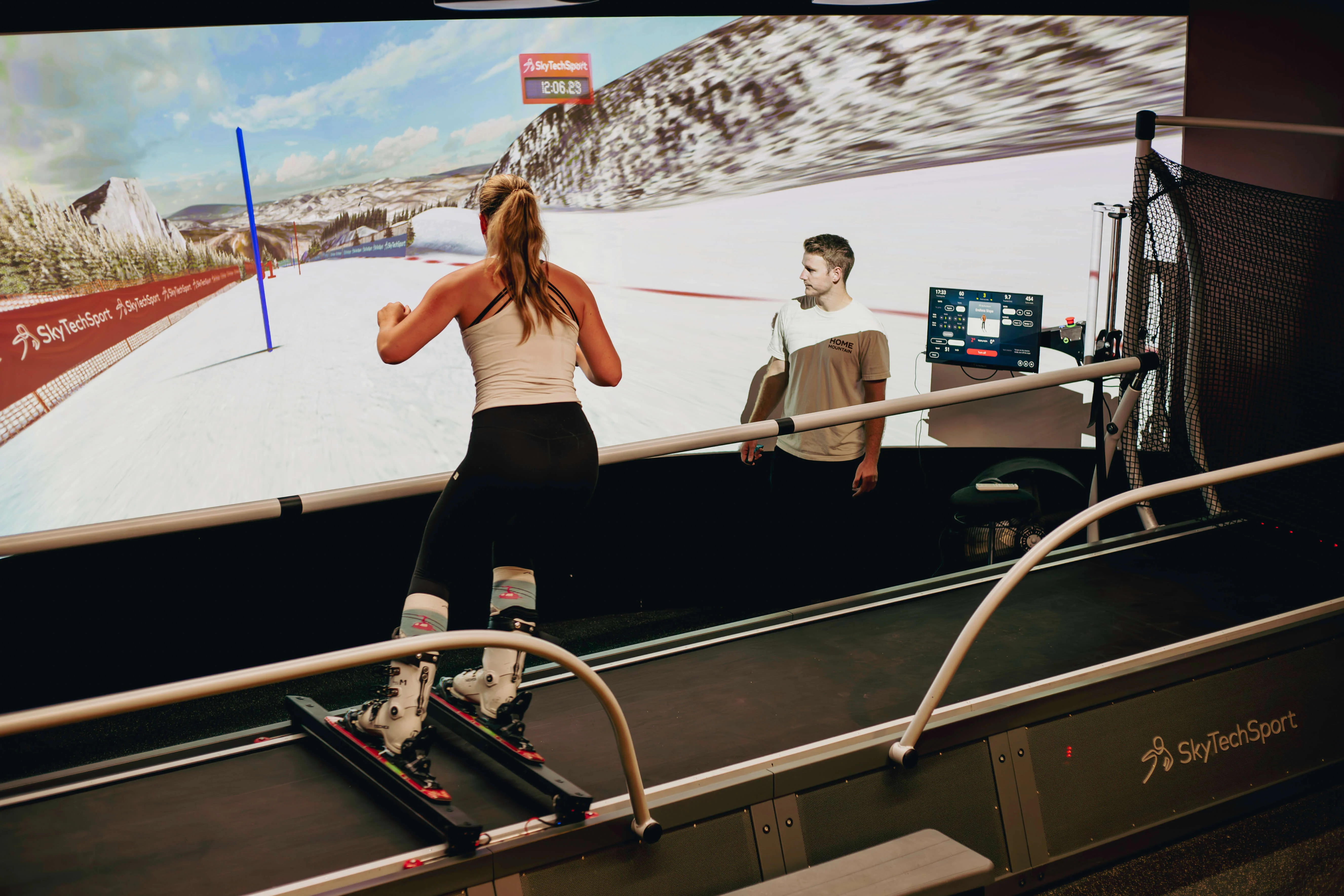
Balance training is one of the most effective ways to improve skiing posture. Because skiing involves constant adjustments to your center of mass, improving balance helps your body naturally stay centered rather than drifting into the backseat. Some skiers practice these movements indoors using equipment that mimics real skiing mechanics. For example, the SkyTechSport Ski Simulator allows skiers to work on balance, edging, and stance in a controlled environment while repeating skiing movements hundreds of times in a single session. Practicing ski-specific movement patterns off the mountain can help reinforce proper posture before returning to the slopes.
Drills to Stay Out of the Backseat
Ski instructors often use drills to help skiers develop better forward balance. A few common examples include:
Hands-forward drill- Keep your hands slightly forward and visible in your peripheral vision. This encourages a more forward stance.
Pole-touch turns- Light pole plants help keep the upper body moving downhill instead of leaning back.
Ankle flex drill- Focus on gently flexing your ankles while skiing easy terrain to build awareness of your stance.
These drills help skiers develop muscle memory for a more balanced position.
Final Thoughts
Leaning back while skiing is one of the most common technique issues, but it’s also one of the easiest to fix once you understand the cause.
By focusing on:
- ankle flexion
- balanced stance
- core stability
- better balance
you can quickly improve your posture and control on the mountain. Skiing becomes much easier when your weight stays centered over your skis. Turns feel smoother, control improves, and fatigue decreases. With consistent practice and attention to proper technique, you’ll spend far less time in the backseat and far more time enjoying confident, controlled skiing. Find a SkyTechSport Ski Simulator near you!