Skiing is often described as one of the best full-body sports, but many people still wonder: what muscles does skiing actually work?
Whether you're a beginner preparing for your first ski trip or an experienced skier looking to improve performance, understanding the muscles used in skiing can help you train more effectively and reduce fatigue on the mountain.
Skiing engages multiple muscle groups at the same time, requiring strength, stability, coordination, and endurance. Below we’ll break down the primary muscles used in skiing and how you can train them to ski stronger and longer.
Skiing is a dynamic sport that requires your body to constantly adjust to changing terrain, speed, and direction. This means several muscle groups work together throughout every run.
Your quadriceps are the most heavily used muscles in skiing. These muscles help control knee flexion and absorb the forces created during turns and terrain changes. The quads are responsible for maintaining the classic skiing stance with bent knees and forward pressure through the boots. This is why many skiers experience the familiar thigh burn after several runs.
The glutes play a major role in stabilizing your hips and helping guide turns. Strong glutes allow skiers to maintain proper posture and transfer power efficiently through the skis. They also help prevent excessive strain on the quadriceps by distributing the workload across the hips.
The hamstrings work together with the quadriceps to stabilize the knee joint and control movement. While they are not the primary drivers of skiing movement, they are essential for maintaining balance and preventing injury. Strong hamstrings help support smooth transitions between turns.
Your core muscles — including the abdominals and lower back — are critical for maintaining stability while skiing. A strong core allows your upper body to remain stable while your legs move dynamically beneath you. This stability helps skiers maintain balance and control through turns and uneven terrain.
The calves and ankle stabilizers help maintain forward pressure in your ski boots and control subtle movements of the skis. Small adjustments in ankle flexion play a big role in edge control and balance. These muscles are constantly active while skiing, making them important for both stability and endurance.
Many people are surprised by how tiring skiing can be. That’s because skiing requires muscles to work in a specific way known as eccentric contraction. In simple terms, this means the muscles are lengthening while under tension. For example, when you absorb a bump or control speed through a turn, your muscles are resisting forces rather than simply lifting weight. This type of muscle activity can cause fatigue more quickly than traditional strength exercises.
Training the right muscle groups before ski season can significantly improve endurance and performance.
Here are several exercises that target the muscles most used in skiing:
Squats are one of the best exercises for skiing because they train the quadriceps, glutes, and core simultaneously. They also replicate the athletic stance used while skiing. Focus on controlled movement and maintaining proper posture.
Lunges strengthen each leg individually, which is important since skiing involves constantly shifting weight from one ski to the other. Lunges also improve balance and hip stability.
Wall sits are excellent for building the muscular endurance required to hold a skiing stance.
To perform a wall sit:
This exercise directly targets the quadriceps.
Core strength plays a huge role in skiing performance.
Helpful core exercises include:
These exercises improve stability and control while skiing.
Balance is just as important as strength in skiing.
Exercises that improve balance include:
Improving coordination and stability helps skiers maintain control during turns and terrain changes.
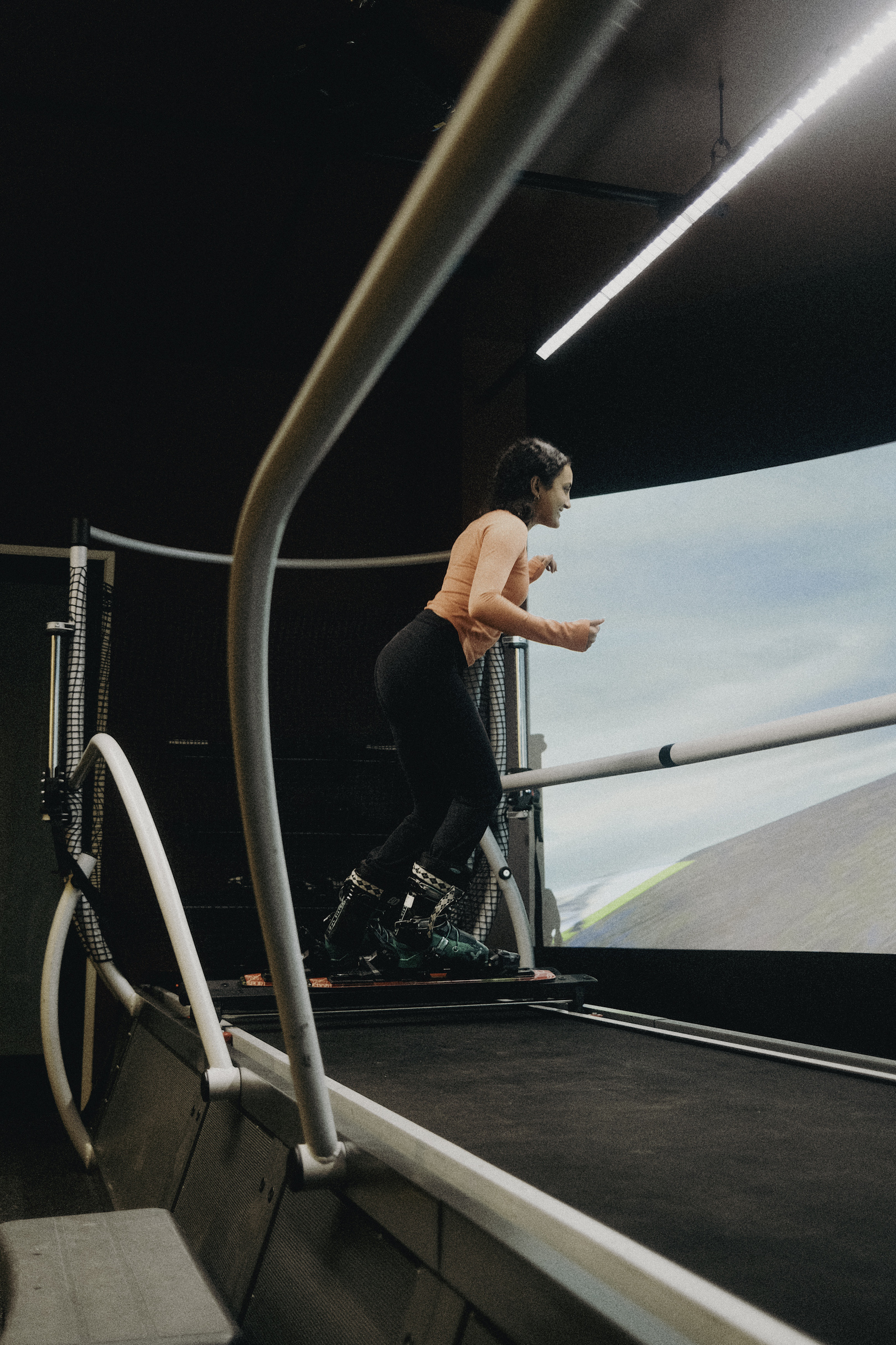
Some skiers also practice ski-specific movement patterns indoors using equipment designed to replicate skiing mechanics. For example, the SkyTechSport Ski Simulator allows skiers to train balance, edging, and pressure control in a controlled environment while repeating real skiing movements.
Practicing these movements repeatedly can help develop the coordination and muscle endurance used during skiing.
You don’t need to train every day to prepare for skiing.
A well-rounded program that includes strength, balance, and endurance training two to three times per week can significantly improve skiing performance.
Consistency over time is what builds the strength and coordination needed for long days on the mountain.
Skiing is a full-body sport that relies heavily on the quadriceps, glutes, hamstrings, core, and stabilizing muscles in the legs and ankles. Understanding which muscles are used in skiing allows you to train more effectively and improve your endurance on the slopes. By strengthening these key muscle groups and practicing balance and coordination, you can ski with more control, less fatigue, and greater confidence. Preparing your body for the demands of skiing helps ensure that when winter arrives, you’re ready to make the most of every run.
.png)


