Ski racing is a sport built on precision.
At high speeds, even small technical mistakes can dramatically impact performance. Tiny differences in edge angle, pressure transfer, or timing often separate great runs from inconsistent ones. That is why ski racers spend so much time refining movement patterns—not just skiing gates.
The challenge is that developing technique requires enormous amounts of repetition, and snow access is limited for most athletes. Weather interruptions, travel schedules, and short training windows can make consistent technical work difficult throughout the year.
This is one reason more coaches and race programs are turning to indoor ski training.
Strength and conditioning are important, but ski racing is ultimately a movement skill. Racers must learn how to manage pressure through the skis while staying balanced dynamically at high speed. Timing, rhythm, and coordination all need to become automatic under pressure.
Those qualities are developed through repetition.
The more frequently athletes reinforce efficient movement patterns, the more natural and consistent those movements become on snow. This is why high-level ski racing development focuses so heavily on technical repetition rather than fitness alone.
For many athletes, the biggest challenge is simply getting enough quality reps throughout the year.
Even during winter, ski racers deal with a surprising amount of downtime. Between lift rides, weather delays, course setup, travel, and recovery, the amount of actual movement repetition can be much lower than people expect.
On top of that, outdoor conditions are constantly changing. Snow texture, visibility, terrain, and course conditions all impact how athletes move and react.
That variability is important for real skiing development, but it can make isolating technical movement patterns difficult.
This is where indoor ski training becomes valuable.
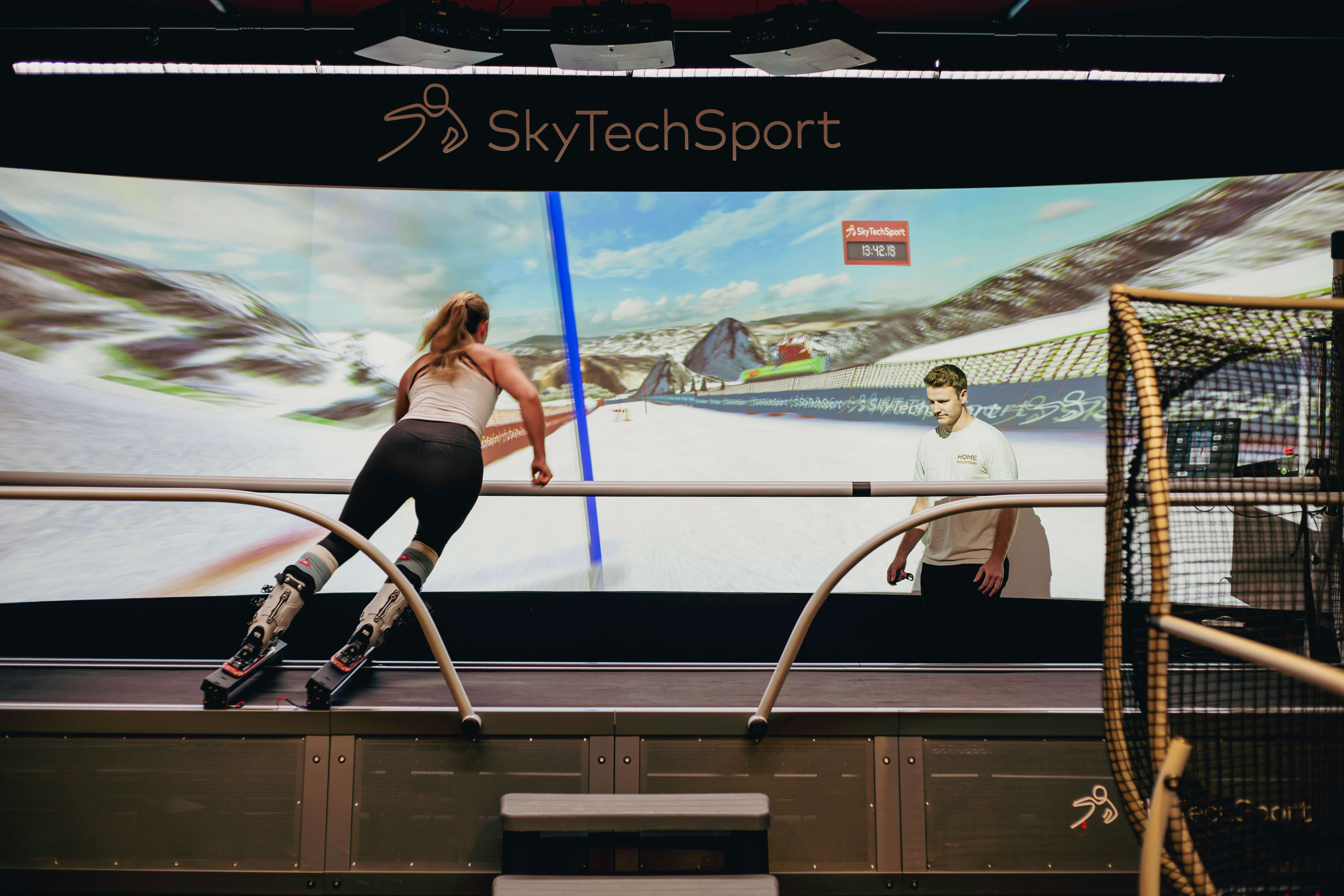
The SkyTechSport Ski Simulator allows athletes to continuously practice skiing movement patterns in a controlled setting. Instead of worrying about terrain, visibility, or course setup, athletes can focus directly on carving mechanics, edge transitions, pressure transfer, and body positioning.
Because movement is continuous and repetitive, athletes are often able to build movement awareness much faster than they would during occasional on-snow sessions alone.
To see ski racers training on the simulator, watch this SkyTechSport training video here:
One reason coaches increasingly value simulators is because they simplify technical feedback.
On the mountain, athletes are constantly adapting to changing terrain and snow conditions. Indoors, many of those variables disappear, allowing coaches to isolate specific movement issues much more effectively.
This often makes it easier to identify:
Because athletes can repeat movements continuously, adjustments happen faster and movement awareness improves more quickly.
Carving is one of the most important skills in ski racing, but also one of the hardest to refine consistently.
Good carving depends on smooth edge engagement, proper pressure transfer, dynamic balance, and coordinated timing throughout the turn. Many skiers understand these concepts intellectually but struggle to consistently execute them on snow.
Indoor ski training allows athletes to repeatedly reinforce those exact movement patterns without many of the distractions present on the mountain.
Movement repetition is especially important for younger athletes.
Junior racers are still developing balance, coordination, movement awareness, and technical consistency. The earlier athletes build efficient movement patterns, the easier it becomes to progress at higher levels later on.
Indoor ski training gives younger athletes the opportunity to continue reinforcing skiing movement patterns throughout the year instead of losing months of development during the off-season.
This is one reason more race academies and ski training centers are integrating ski simulators into athlete development programs.
Many athletes spend the off-season focused primarily on strength and conditioning.
That support work matters, but strength alone does not automatically improve:
Ski racing performance ultimately depends on how efficiently athletes move.
That is why movement-based training has become such an important part of modern ski racing development.
The biggest advantage of indoor ski training is consistency.
Instead of restarting every winter, athletes can continue refining movement patterns throughout the year. That consistency often leads to:
For ski racers, small technical improvements compound quickly over time.
If you want to explore ski simulator setups, you can learn more here.
Can ski simulators help with ski racing technique?
Yes—but not because they replace skiing.
They help because they increase repetition, movement awareness, and technical consistency throughout the year. That is why more coaches, athletes, and race programs are incorporating tools like the SkyTechSport Ski Simulator into their training environments.
Indoor ski training helps athletes continue refining movement patterns between ski days and between seasons, allowing them to progress faster and train more consistently year-round.
To learn more about indoor ski training or find a location near you, visit https://skytechsport.com/