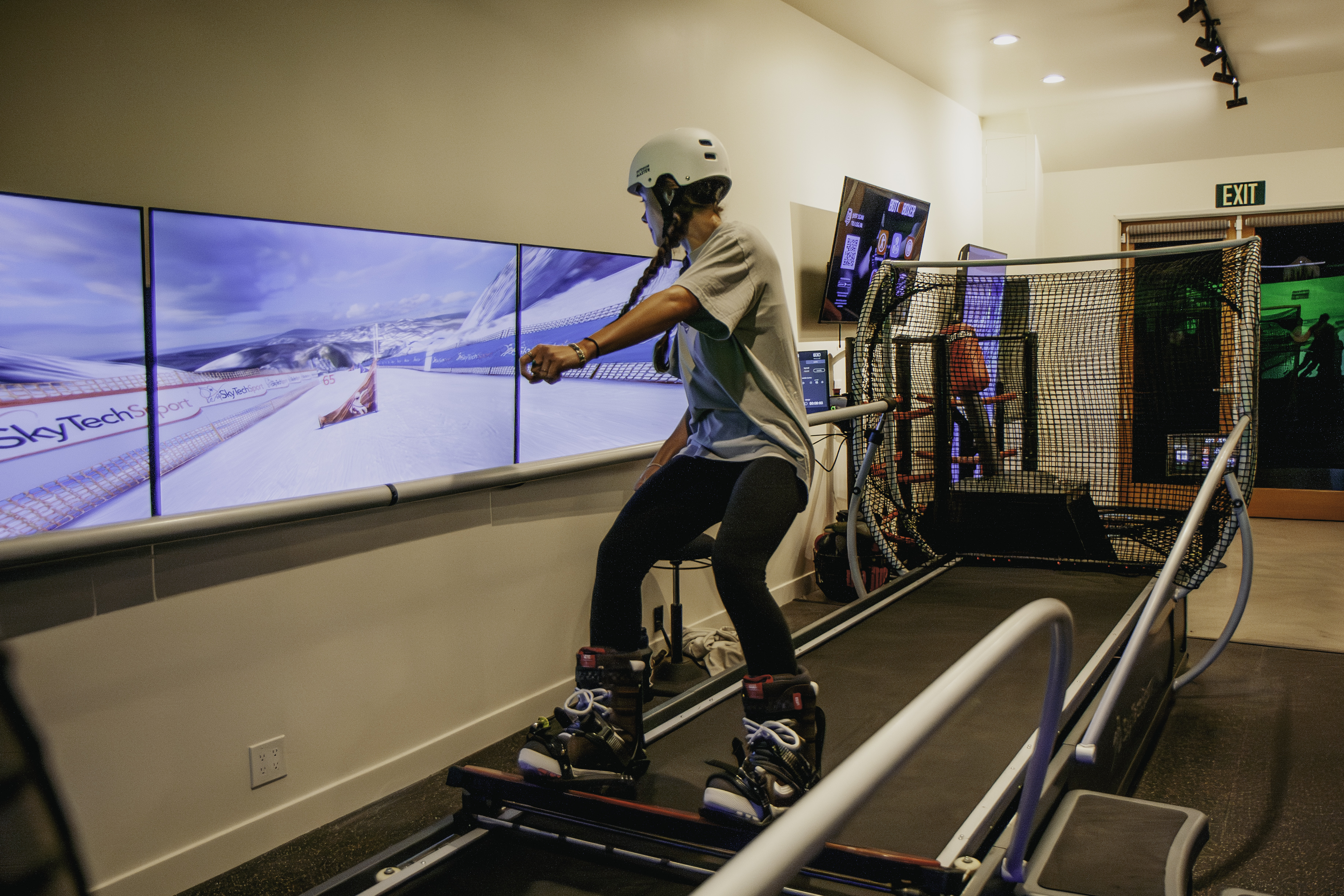
Ski racing is one of the most technical sports in the world.
At high speeds, tiny mistakes in balance, timing, or pressure control can completely change a run. That is why elite ski racers spend countless hours refining movement patterns—not just skiing gates. The challenge is that snow access is limited.
Even the best athletes in the world cannot train on snow every day of the year. That is why more racers, coaches, and development programs are incorporating indoor ski training into their off-season routines.
Ski racing is built on movement consistency.
Racers are constantly refining:
The problem is that those movement patterns fade without repetition. Long breaks between training sessions can slow development significantly, especially for younger athletes still building technical foundations.
This is why year-round movement training has become increasingly important in ski racing development.
Even during winter, ski racers deal with:
A large portion of a training day may involve waiting rather than actual movement repetition. Indoor ski training changes that completely.
The SkyTechSport Ski Simulator allows racers to train continuously in a controlled environment focused entirely on movement quality and repetition.
Instead of relying solely on snow conditions, athletes can continue practicing:
Because movement is continuous, athletes can accumulate significantly more repetitions in less time.
To see ski racers training on the simulator, watch this SkyTechSport video here:
Coaches increasingly use indoor training because it allows athletes to isolate movement patterns without many of the distractions found on snow.
On the mountain, athletes are constantly adapting to:
Indoor training removes those variables and allows coaches to focus directly on:
That often leads to faster technical feedback and more focused development.
For younger racers, repetition is especially important.
Developing athletes need thousands of quality repetitions to build:
Indoor ski training allows younger athletes to continue developing those skills even during the off-season.
This is one reason many race academies and training facilities are incorporating ski simulators into their programs.
One of the biggest advantages of simulator training is that it combines technical repetition with ski-specific endurance.
Unlike traditional workouts, indoor ski training requires:
That combination translates extremely well to ski racing demands.
To see how athletes train year-round on the simulator, watch this off-season training video from SkyTechSport:
The gap between seasons used to mean months without skiing movement.
Now, athletes can continue refining technique throughout the year instead of restarting every winter.
That consistency often leads to:
For racers, those small improvements can make a massive difference over time.
Many racers spend time in the gym building strength and conditioning.
That is important, but ski racing is still ultimately a movement skill.
Strength alone does not develop:
Those qualities improve through repetition.
That is why movement-based training is becoming such a major part of modern ski racing development.
Ski racing progression depends heavily on repetition, movement quality, and consistency. That is why more athletes, coaches, and race programs are using tools like the SkyTechSport Ski Simulator to continue training skiing movement patterns year-round.
Indoor ski training helps bridge the gap between seasons, allowing racers to maintain technique, build endurance, and accelerate progression even when there is no snow.
If you want to explore simulator setups and training applications, click here!


