Guide
Indoor Ski Training: How to Practice Skiing Year-Round
You don't need snow — or a mountain — to get better at skiing. With the right indoor ski training setup you can rehearse real carving technique and train for ski season year-round. Here's how indoor practice actually works, and which methods build skills that transfer to the slope.
Can you really practice skiing indoors?
Yes. Skiing is a skill of balance, edge control and timing — and all three can be trained off-snow. The key is practising the motion of a carved turn, not just general fitness. A ski simulator recreates that motion precisely, so the muscle memory you build indoors carries straight onto the mountain.
That's why ski academies, national teams and instructors train indoors all year. It removes the two biggest limits on improvement — snow and time — and lets you repeat the same movement far more often than a day on the hill ever could.
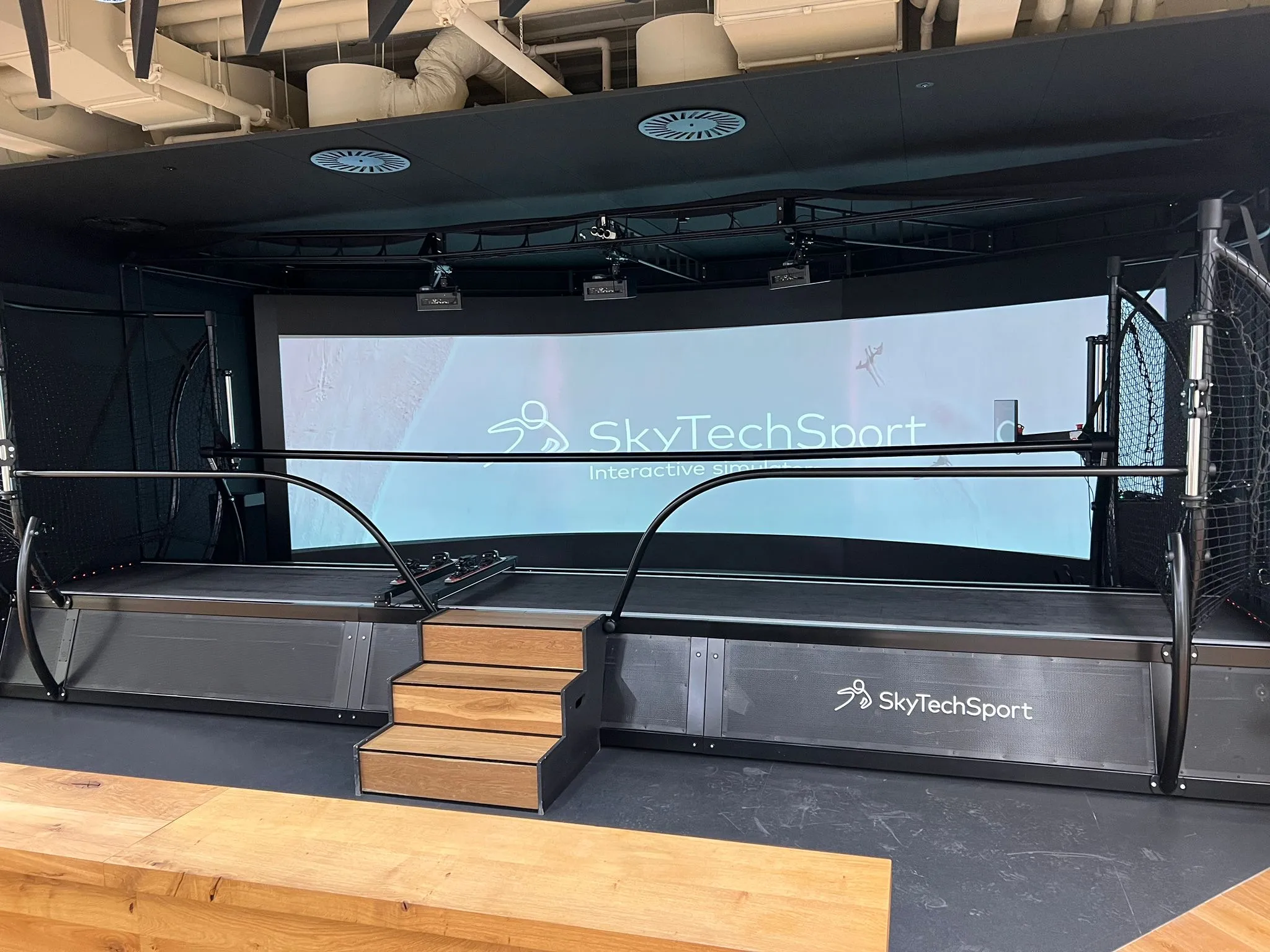
Three ways to practice skiing indoors
Ski simulators
Best for: Real carving & edging technique
A ski simulator reproduces the exact stance, weight transfer and edge-to-edge motion of carving on snow, so muscle memory transfers directly to the slope — the closest thing to real skiing you can do indoors, year-round.
Dryland & balance training
Best for: Strength, balance, conditioning
Balance boards, slide boards and ski-specific strength work build the legs and core skiing demands. Great conditioning — but they don't rehearse the turn itself.
Indoor snow & dry slopes
Best for: Sliding on a surface
Indoor snow centres and brush/dry slopes let you slide, but they're rare, travel-dependent and built for recreation rather than focused technical practice.
The most effective indoor program combines all three — but if your goal is better technique, time on a ski simulator does the heavy lifting. The same applies to indoor snowboarding: the simulator trains snowboard stance, edging and carving exactly the same way.
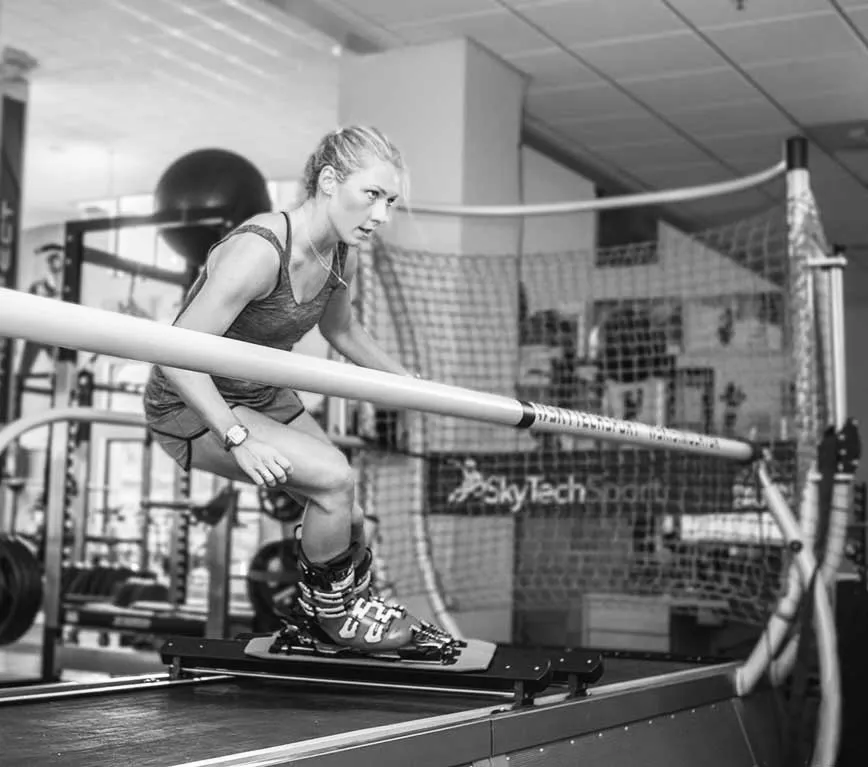
What you can train on a ski simulator
- Stance & balance — a centred, athletic position held through the turn.
- Edging & carving — clean edge-to-edge transitions and progressive edge angle.
- Weight transfer & rhythm — the timing that makes turns link smoothly.
- Ski-specific conditioning — the legs and core that keep technique together late in a run.
Explore the ski simulator for home, train on one at a ski simulator club, or follow the PSIA-AASI technique guide.
Indoor ski training: how to train for ski season year-round
The skiers who arrive strongest in December are the ones who never fully stopped. A simple indoor ski training routine keeps technique and conditioning sharp through the off-season — three layers that work together:
- 01
Carving technique on a ski simulator
Rehearse the full carved turn — stance, edging, weight transfer and rhythm — so muscle memory transfers straight to snow. This is the part general fitness can't replicate.
- 02
Ski-specific strength & balance (dryland)
Balance boards, slide boards and ski-specific strength work condition the legs and core skiing demands, so technique holds together late in a run.
- 03
Keep it year-round
Train consistently through the off-season so your first day back on snow is spent skiing, not rebuilding. Set up indoor ski training at home or for your business or training facility.
Practice skiing indoors — near you
Train on a SkyTechSport simulator at a training club, rent one for a season, or start your own indoor ski studio.
Book a demo