The Best Recovery Tips After a Long Day of Skiing
There’s nothing quite like a full day on the mountain—fresh turns, crisp air, and that satisfying burn in your legs. But as any skier knows, the fun can quickly turn into soreness, fatigue, or even injury if you don’t give your body the recovery it deserves.
Proper recovery not only helps you feel better the next day, but it also improves long-term performance and keeps you skiing stronger throughout the season.
1. Stretch While Your Muscles Are Warm
Right after skiing, your muscles are still warm and pliable—making it the best time to stretch. Focus on your:
- Quads & hamstrings (forward folds, standing quad stretch)
- Calves (downward dog, heel drops)
- Hips & lower back (pigeon pose, seated spinal twist)
Stretching reduces tightness and helps prevent overuse injuries.
2. Rehydrate & Refuel
Skiing is more demanding than many realize—it’s essentially an all-day workout at altitude. Dehydration and nutrient depletion can lead to cramps and fatigue.
- Drink water or electrolyte drinks right after skiing.
- Refuel with a balanced meal of protein, healthy fats, and complex carbs.
- Don’t skip snacks—nuts, bananas, and protein bars are great for chairlift breaks too.
3. Use Recovery Tools
A little TLC goes a long way for tired legs. Some recovery methods to try:
- Foam rolling to release tight muscles.
- Compression boots or leggings to improve circulation.
- Sauna or cold plunge to speed up muscle recovery.
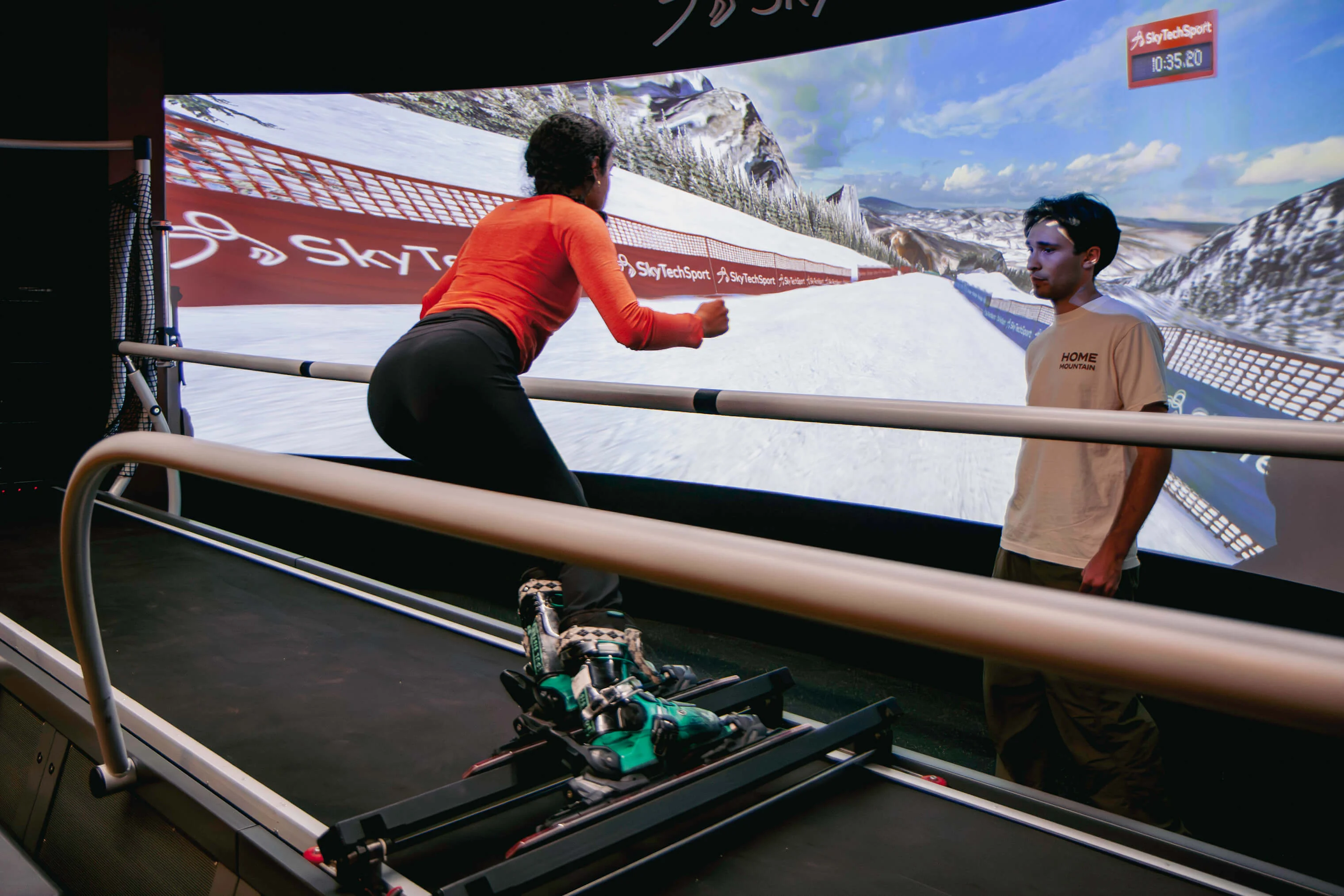
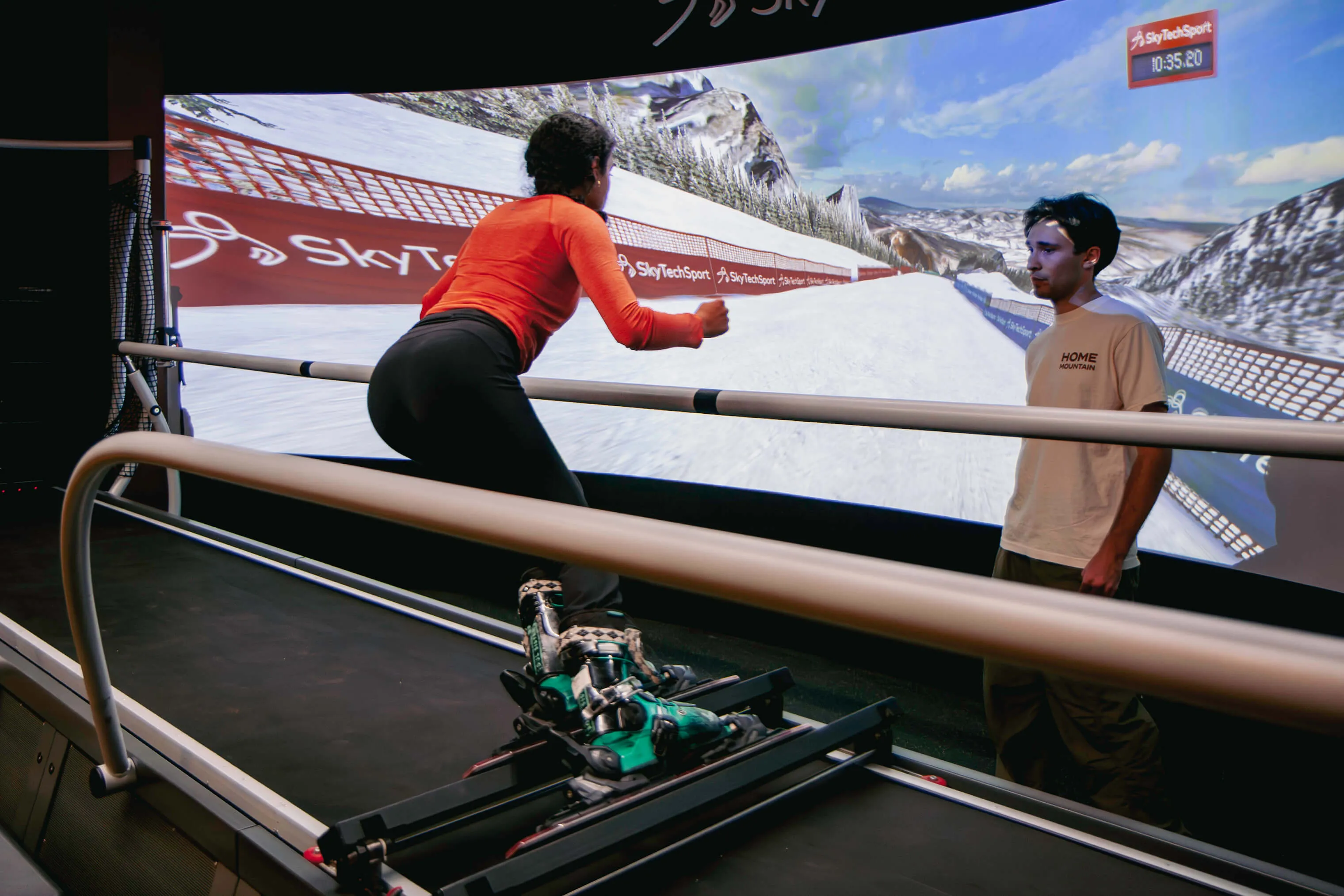
Studios like Home Mountain even combine ski simulators with recovery lounges, so you can train, ski, and recover all in one place.
4. Prioritize Sleep
The best recovery tool is free: sleep. After a day on the slopes, your body is rebuilding muscle fibers, restoring glycogen, and repairing tissues—all of which happens while you sleep. Aim for 7–9 hours of quality rest.
5. Train Smarter Off the Slopes
The stronger and more conditioned your body is, the quicker it bounces back. Cross-training in the off-season improves endurance and reduces soreness. Tools like the SkyTechSport Ski Simulator help you replicate skiing’s exact muscle demands indoors, so your body is better prepared for long days on snow.
Final Thoughts
Recovery is the secret weapon of great skiers. By stretching, hydrating, using recovery tools, and prioritizing sleep, you’ll set yourself up for more energy, less soreness, and better performance on the slopes.
And when you want to train smarter before your ski trip, the SkyTechSport Ski Simulator offers a low-impact way to build endurance and technique—so your body recovers faster and skis harder.