If you're planning a winter trip and trying to decide between skiing or snowboarding, you're not alone. Both sports are exciting, challenging, and rewarding, but they come with different learning curves. So which one is easier to learn? The answer depends on your goals, athletic background, and how you prefer to move.
Skiing is often considered easier for beginners to learn. Because your legs move independently and you face forward, the stance feels more natural for most people. Skiers can also use poles for balance and propulsion, which helps when moving on flat terrain. Many beginners are able to learn how to stop and make basic turns within their first day.
However, as skiers progress, advanced techniques such as carving, skiing moguls, and skiing steep terrain require more technical precision and practice to master.
Snowboarding can be more challenging on the first day because both feet are attached to one board, and the sideways stance can feel unfamiliar. Most beginners spend a good amount of time falling while learning how to balance and control their edges.
Once snowboarders learn how to link turns, progression often happens quickly. Many riders feel comfortable after a few days and can begin exploring more terrain sooner than they expect.
Skiing is generally easier for complete beginners at the start, while snowboarding tends to feel easier once the basics are learned and riders begin linking turns.
Both skiing and snowboarding require leg strength, core stability, balance, and endurance, but they use muscles in different ways.
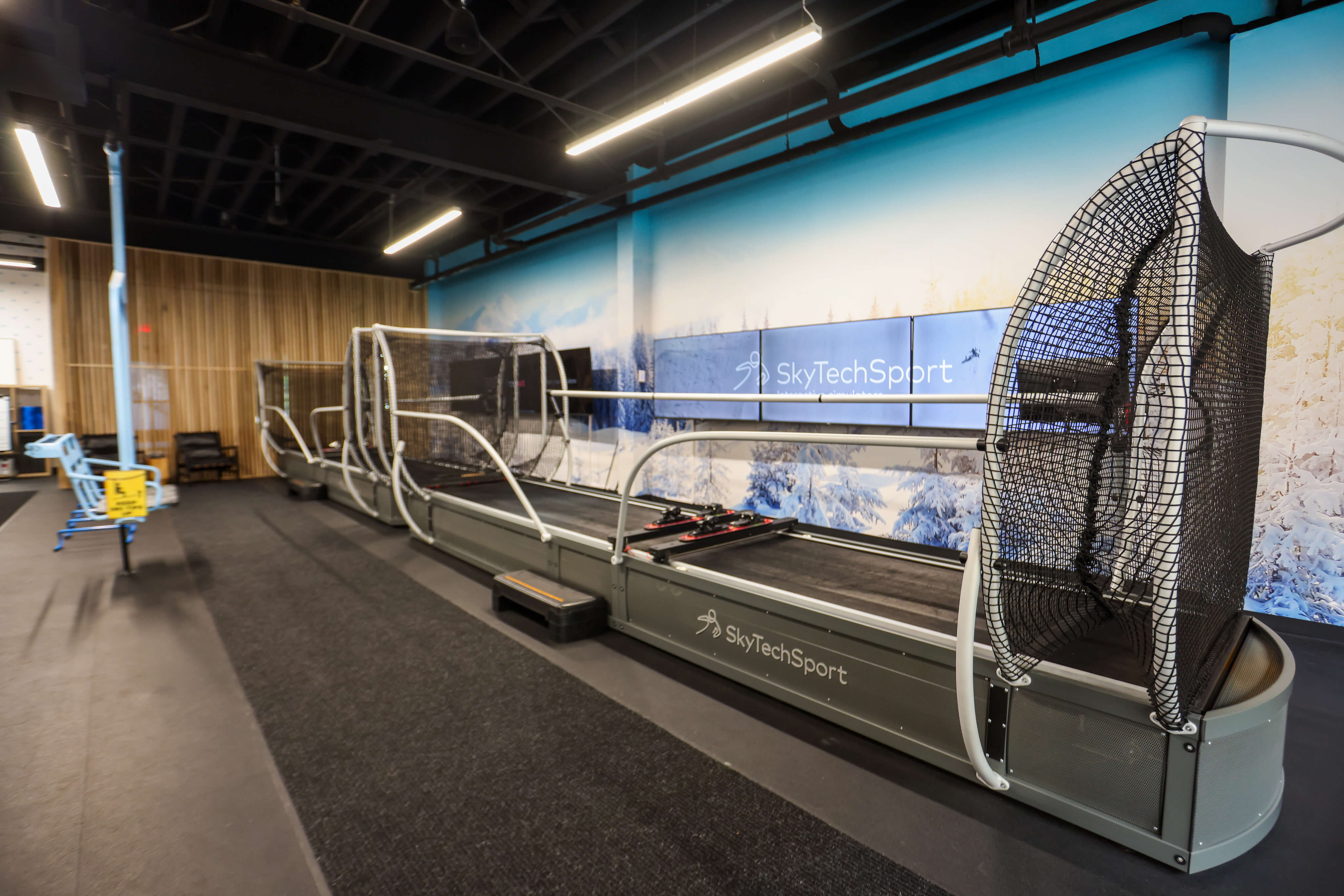
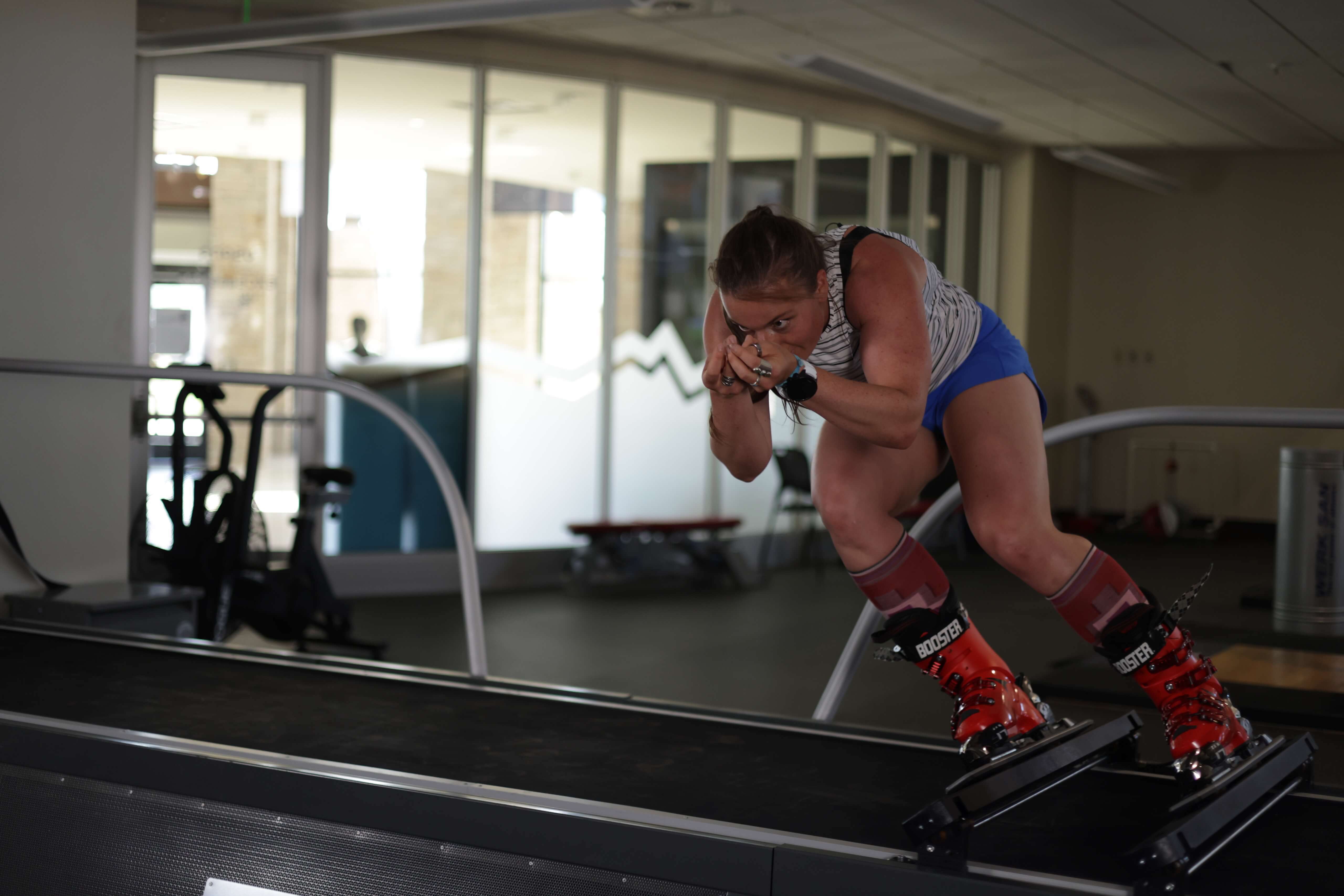
Regardless of which sport you choose, balance training and strength training can significantly improve your performance and reduce fatigue on the mountain. Training on a SkyTechSport Ski Simulator can help develop balance, endurance, and muscle control before getting on snow.
Most beginner skiers can learn how to stop and make basic turns within a few hours, and many feel comfortable skiing green runs within three to five days.
Snowboarders often have a more difficult first one to two days, but after three to five days, many riders are able to link turns and ride comfortably on beginner terrain.
Overall, skiing has an easier introduction, while snowboarding catches up quickly after the initial learning phase.
Skiing and snowboarding come with different injury risks.
Skiers are more likely to experience knee injuries due to twisting falls. Snowboarders are more likely to experience wrist injuries from falling forward or backward. Proper instruction, strength training, and balance training can help reduce injury risk in both sports.
Practicing balance and movement patterns on a SkyTechSport Ski Simulator can help improve coordination and reaction time, which may help reduce the risk of injury when learning either sport.
Choose skiing if:
Choose snowboarding if:
Whether you decide to ski or snowboard, preparing before your trip can make a significant difference in how quickly you improve and how much you enjoy your time on the mountain. Pre-season training helps build balance, strength, and confidence so you can progress faster once you get on snow.
The SkyTechSport Ski Simulator allows both skiers and snowboarders to train balance, technique, and endurance in a controlled environment, helping beginners learn faster and helping experienced riders refine their skills year-round.