If you’ve ever finished a long day on the slopes with burning legs and total exhaustion—you’ve probably wondered:
Is skiing actually a good workout?
The answer is a resounding yes. In fact, skiing is one of the most effective full-body workouts you can do—combining strength, endurance, balance, and coordination all in one.
Let’s break down exactly why.
Skiing isn’t just fun—it’s surprisingly demanding.
On average:
The exact number depends on terrain, intensity, and conditions—but either way, it rivals (or beats) many traditional gym workouts.
Skiing is a true full-body workout, even if it feels like it’s “just your legs.”
These muscles are constantly engaged to absorb impact and control turns.
Your core stabilizes your body, keeps you balanced, and allows for efficient movement down the mountain.
While not the primary drivers, your upper body plays a key role in balance, pole planting, and maintaining proper form.
Skiing is different from most workouts because it combines multiple elements at once:
This combination creates a workout that’s both physically demanding and mentally engaging—something traditional gym routines often lack.
The gym is great for building foundational strength—but skiing applies that strength in a dynamic, real-world way.
Skiing:
That’s why many athletes are now blending both approaches—using gym training for strength and ski-specific training to apply it.
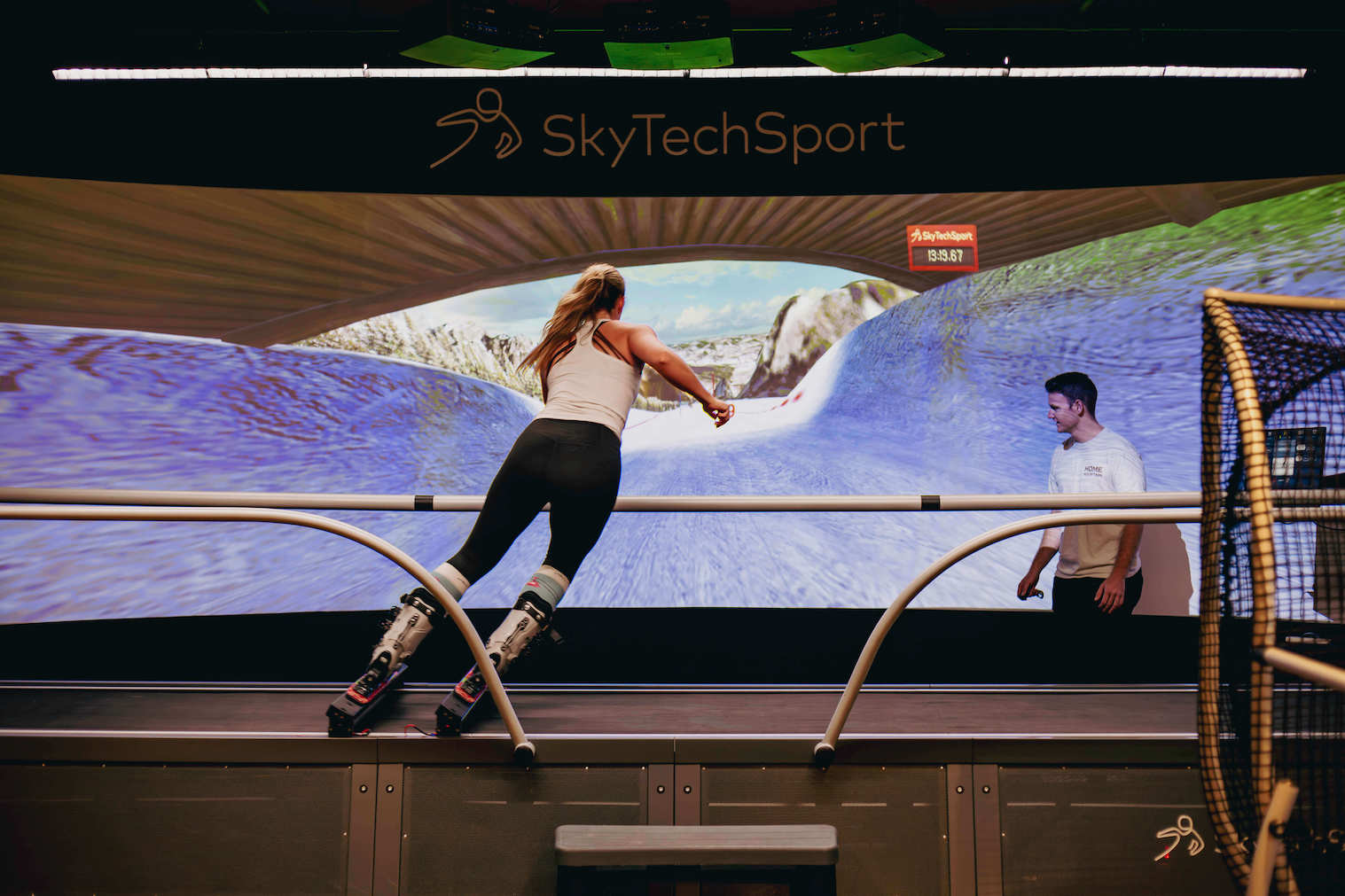
This is where things get interesting. One of the biggest limitations of skiing as a workout is that it’s seasonal. But thanks to advances in training technology, it’s now possible to replicate many of the same physical demands indoors. The SkyTechSport Ski Simulator, for example, is designed to mimic real skiing movements—engaging your legs, core, and stabilizers in a way that feels surprisingly close to being on snow.
This means you can:
Instead of losing fitness in the off-season, you can continue progressing.
Skiing doesn’t feel like a workout—but your body says otherwise.
It’s:
And that combination makes it easier to stay consistent compared to traditional workouts. With more indoor training options becoming available, skiing is no longer just a winter activity—it’s becoming a year-round fitness solution.
So, is skiing a good workout? It’s more than that—it’s one of the most complete workouts you can do. Whether you’re on the mountain or training indoors, skiing challenges your body in ways that build strength, endurance, and coordination all at once. And for those looking to stay in ski shape year-round, incorporating ski-specific training tools can help you maintain that edge long after the snow melts.