Your first ski trip is an exciting experience, but it can also feel intimidating. Between figuring out equipment, learning how to stop, and navigating the chairlift, there is a lot to learn in a short amount of time. To help you avoid common beginner mistakes, here is a survival guide for first-time skiers.
Wearing the right clothing can make a huge difference in how comfortable you feel on the mountain.
Wear layers, including a moisture-wicking base layer, an insulating mid-layer, and a waterproof jacket and pants. Wear proper ski socks, which should be a single pair of moisture-wicking wool socks. Thick or multiple pairs of socks can actually make your feet colder and less comfortable in your boots. Goggles, gloves, and a helmet are essential for both comfort and safety.
Try to avoid renting clothing at the resort if possible. Rental clothing is often expensive and may have limited size options. Buying or borrowing gear ahead of time is usually a better option.
Everyone falls while learning to ski. The key is learning how to fall in a way that reduces the risk of injury.
Try to land on your side rather than on your back or wrists. Let go of your poles if necessary during a fall. When getting up, turn onto your side, place your skis parallel across the slope, and push yourself up from that position.
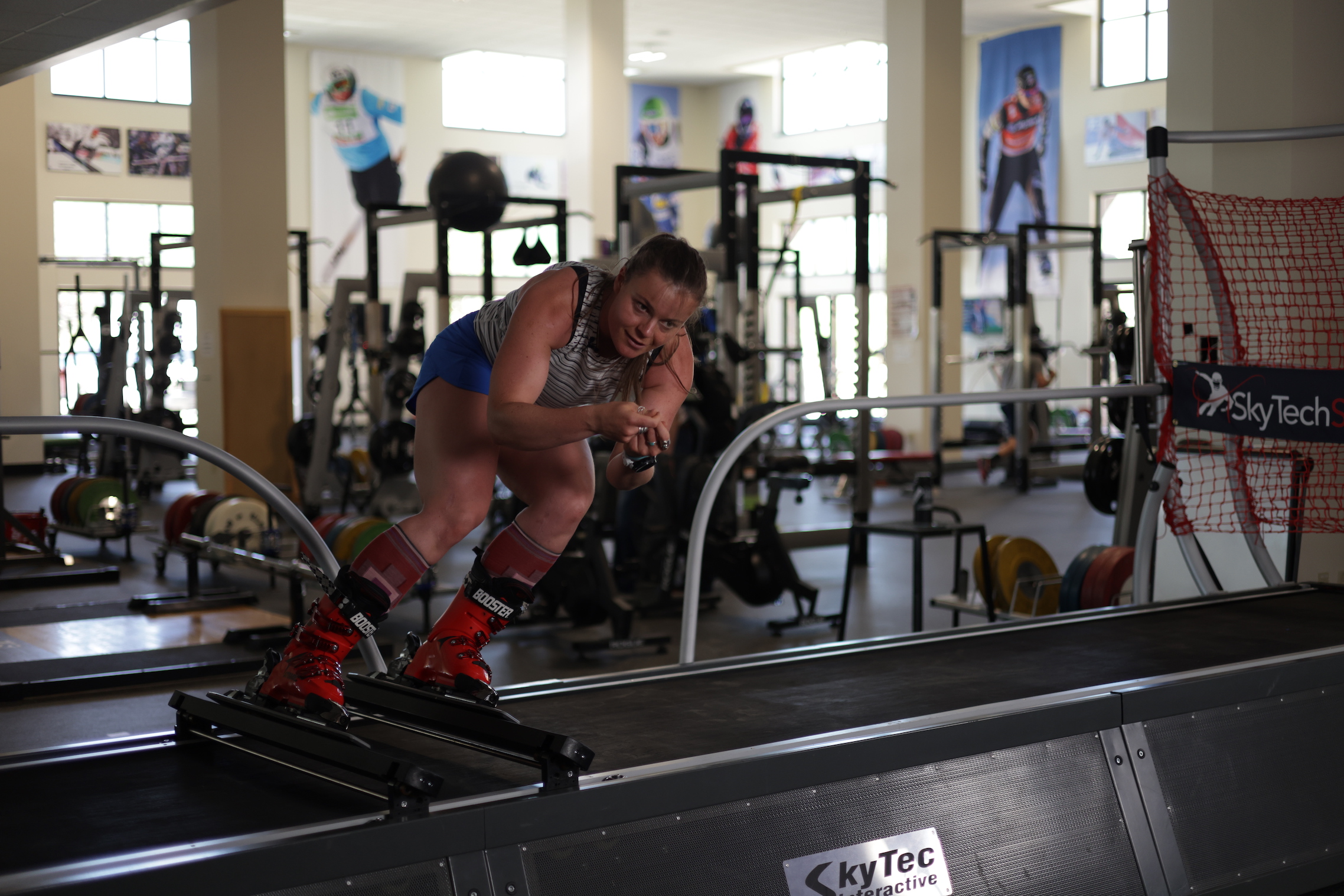
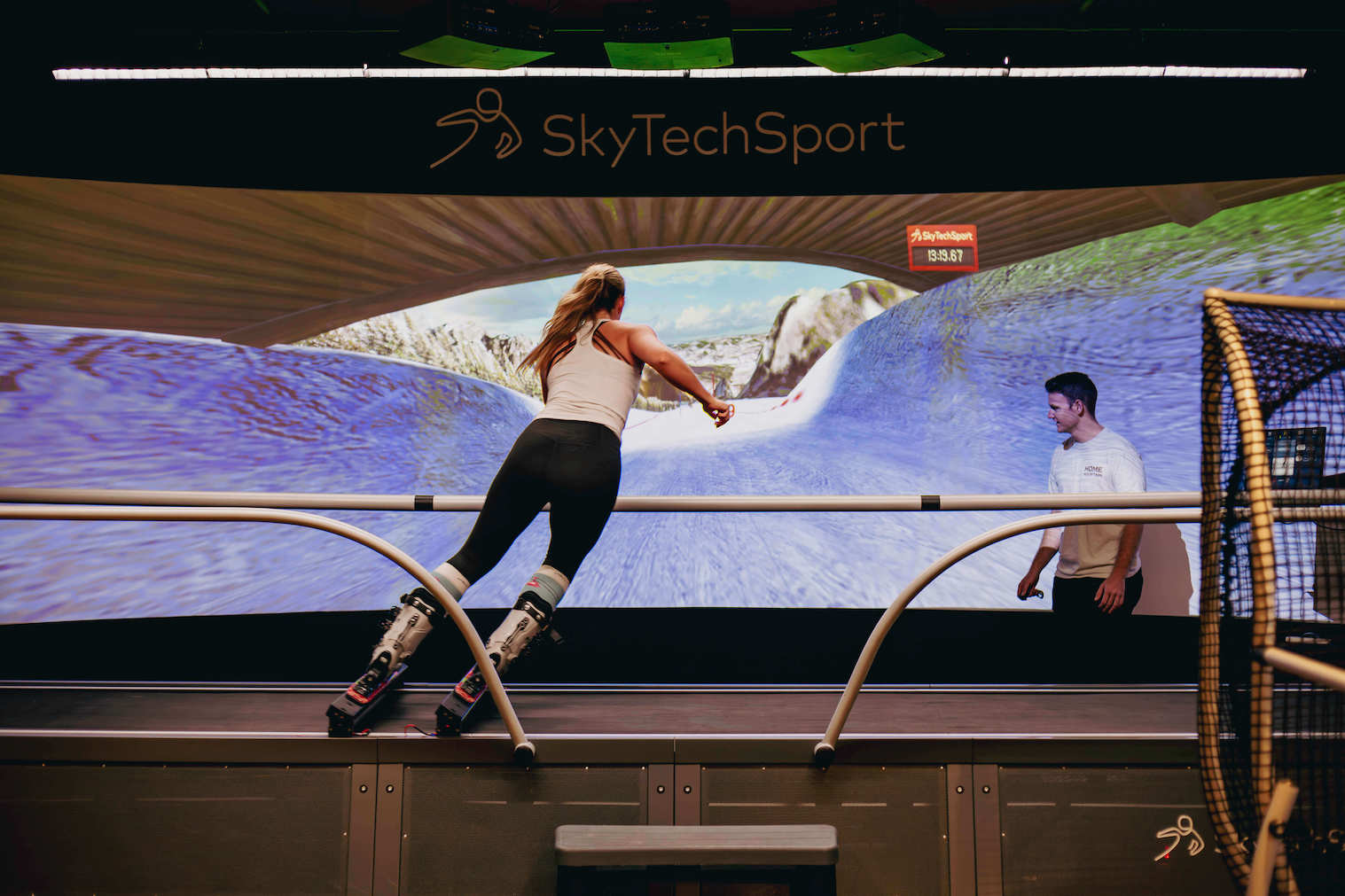
Practicing balance and controlled movements on an indoor ski simulator, such as the SkyTechSport Ski Simulator, can help beginners feel more stable and confident before skiing on real snow.
Chairlifts can be intimidating for beginners, but they become easy once you understand the process.
Watch a few chairs before loading to see how others position themselves. Move up to the loading line confidently and avoid hesitating when the chair approaches. When unloading, keep your ski tips up, let the chair push you forward, and glide away from the unloading area. Do not stop right at the exit, as this can cause congestion for other skiers getting off the lift.
One of the most important beginner skills is learning how to stop. The wedge or “pizza” technique, where you point your ski tips inward, is the easiest way to slow down and control speed. As you improve, you will learn parallel skiing and carving for better control and efficiency.
Practicing turns and edge control on a ski simulator before your trip can help you feel more comfortable when you transition to real snow.
Even if you have friends or family who ski, taking a professional lesson is one of the fastest ways to learn proper technique and avoid frustration.
Group lessons are a great budget-friendly option, while private lessons provide more individualized instruction and faster progress. Indoor training on a SkyTechSport Ski Simulator can also help beginners develop technique and confidence in a controlled environment before going to the mountain.
Skiing uses muscles that many people do not use in daily life, so it is normal to feel sore after your first day.
Stretch before and after skiing, use a foam roller for recovery, and consider training your legs and core before your trip. Preparing your body ahead of time can make your ski trip much more enjoyable.
If you want your first ski trip to be a success, preparation is key. Practicing balance, edge control, and endurance before your trip can help you feel more confident and in control on the mountain.
The SkyTechSport Ski Simulator allows beginners to practice skiing movements in a controlled environment so they can arrive at the mountain better prepared, more confident, and ready to enjoy the experience.