The fastest way to ruin your first ski trip of the season? Showing up out of shape.
Every winter, skiers hit the mountain excited—only to deal with burning legs, poor balance, fatigue after two runs, or worse… injury. The good news: a little preparation goes a long way.
If you want to ski stronger, longer, and feel better on day one, here’s how to get in shape for ski season before winter arrives.
Skiing demands more than people think.
It requires:
Without preparation, your body has to “learn on the fly”—which usually means soreness, frustration, and higher injury risk.
Squats build the exact lower-body strength skiers need.
Focus on:
Strong quads and glutes help you stay stable through turns and absorb terrain.
Lunges train balance, leg strength, and unilateral control.
Forward lunges, reverse lunges, and walking lunges are all excellent choices.
One of the best ski-specific endurance exercises.
Hold a seated position against the wall for 30–60 seconds to mimic the sustained leg tension skiing creates.
Your core helps transfer power and keeps you centered over your skis.
Add:
Skiing involves side-to-side power and edge transitions.
Lateral jumps help train explosiveness, coordination, and athletic movement patterns.
Balance is one of the biggest separators between beginner and advanced skiers.
Try:
Tight hips and ankles can limit performance.
Spend time improving:
This helps you move more freely and efficiently on snow.
You don’t need to become a marathon runner—but basic conditioning matters.
Great options:
Better conditioning = more runs, better technique, less fatigue.
Traditional workouts help—but they don’t always replicate skiing itself.
That’s why many skiers now add ski-specific movement training before the season starts.
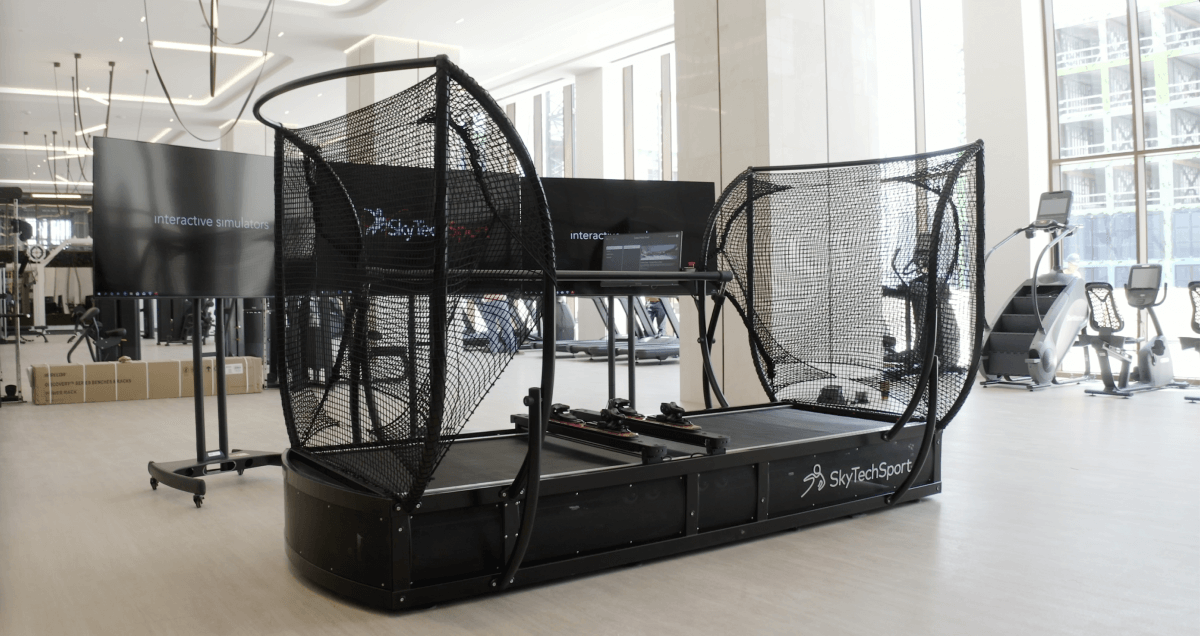
The SkyTechSport Ski Simulator allows skiers to:
Instead of just getting stronger, you’re training the actual movements you’ll use on the mountain.
For many skiers, this is the fastest way to feel ready when winter begins.
Ideally:
But even 3–4 weeks of consistent training can make a noticeable difference.
The key is starting now—not waiting until your first ski day.
If you want to enjoy ski season more, train before it starts.
A few weeks of focused preparation can help you:
And if you really want a head start, adding ski-specific training tools like the SkyTechSport Ski Simulator can bridge the gap between the gym and the mountain.


