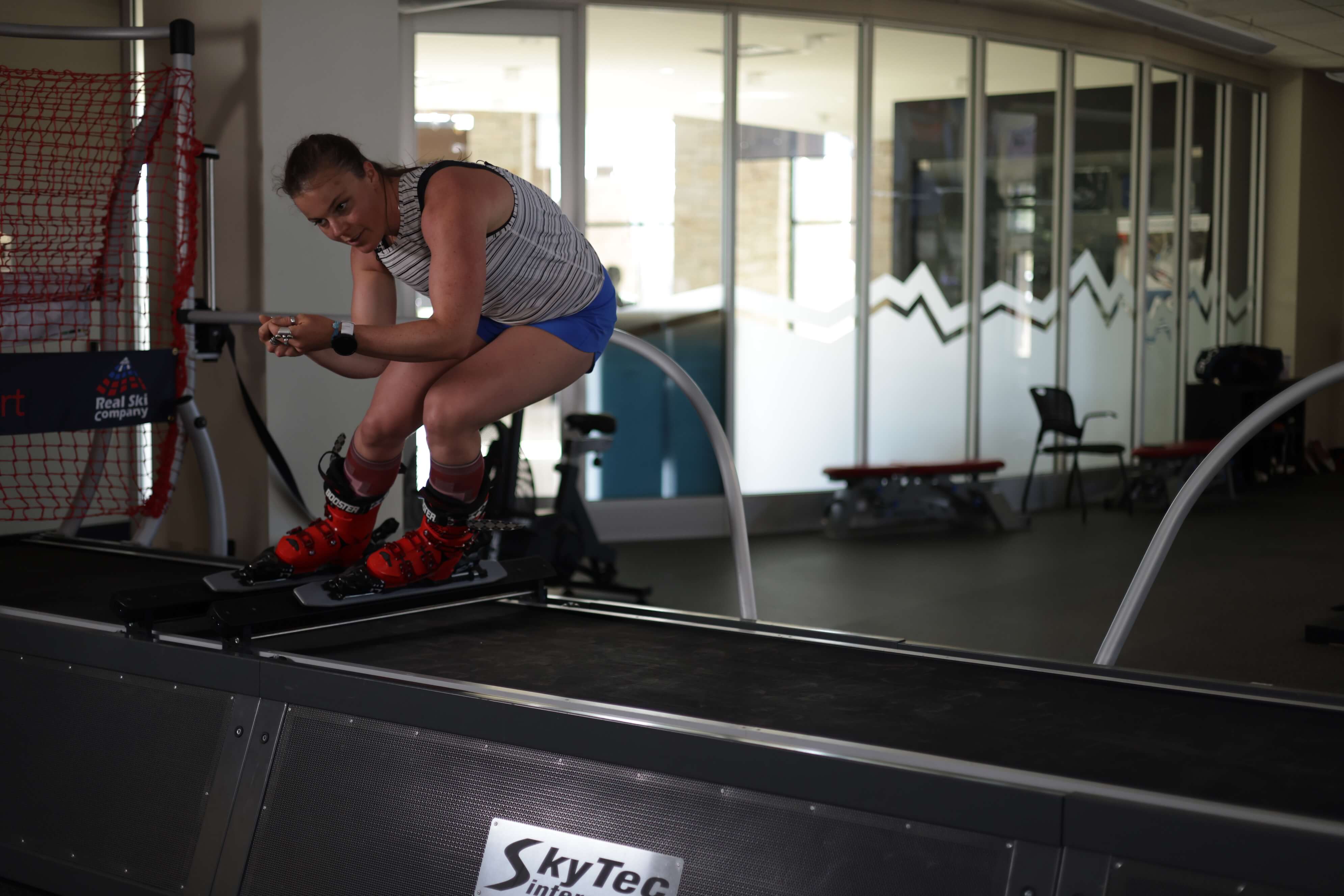
When many people think about ski simulators, they picture entertainment or beginner practice. But in reality, more professional athletes, coaches, and race programs are incorporating indoor ski training into their year-round preparation.
Why? Because skiing is highly technical, and technical sports improve through repetition. That is exactly what ski simulators provide.
Elite skiers do not rely only on winter to improve. Their off-season training focuses heavily on maintaining movement quality, refining technique, improving coordination, and building ski-specific conditioning.
The goal is not simply to stay fit. It is to preserve and strengthen the exact movement patterns that matter once they return to snow.
This is one of the biggest differences between advanced athletes and recreational skiers. Professional athletes understand that long gaps without movement repetition can slow progression significantly.
The challenge with skiing is obvious: you cannot always ski.
Even professional athletes deal with seasonal limitations, inconsistent snow conditions, travel demands, and limited access to training environments. This makes it difficult to maintain the repetition needed for continuous progression.
Skiing is a sport built around timing, pressure control, balance, and coordination. Those qualities fade when they are not trained consistently. That is why athletes increasingly look for ways to continue skiing movement patterns even when they are off snow.
Most skiers underestimate how important repetition really is.
Improvement in skiing comes from consistently reinforcing:
The problem is that most skiers only get a limited number of ski days per year. Even highly motivated recreational skiers may only spend a few weekends or trips on snow each season. That is often not enough repetition to create rapid technical improvement.
The SkyTechSport Ski Simulator allows athletes to continue practicing skiing movement patterns year-round.
Instead of waiting months between ski sessions, athletes can continue training:
Because the movement is continuous and repetitive, athletes are able to build consistency much faster than they could from occasional ski trips alone. To see how indoor ski training works, you can learn more here.
Coaches value ski simulators because they create a controlled training environment.
On the mountain, athletes are constantly dealing with variables like terrain, weather, crowds, and changing snow conditions. Indoors, those distractions are removed, making it easier to focus purely on movement quality and technique.
This allows coaches and athletes to isolate specific skills such as carving mechanics, pressure control, and turn timing in a much more concentrated way. The result is often faster technical feedback and more efficient training sessions.
The SkyTechSport Ski Simulator has been integrated into elite training environments, including use by the U.S. Ski & Snowboard Team for year-round performance development.
This type of indoor training helps athletes maintain skiing movement patterns during the off-season while also supporting:
To explore more about these training applications, watch the Youtube video below of Olympic Gold Medalist, Breezy Johnson training on the SkyTechSport Ski Simulator.
You do not need to be a professional athlete to benefit from ski simulator training.
In many ways, recreational skiers may benefit even more because they often have fewer opportunities to ski throughout the year.
Most people lose progress between seasons because they stop practicing the actual movements involved in skiing. Indoor ski training helps close that gap by allowing skiers to continue developing movement patterns year-round. That means less first-day rust, faster progression, and more confidence once winter begins again.
A common mistake among skiers is focusing only on fitness. Strength and conditioning matter, but skiing is ultimately a movement skill. Real progression depends on coordination, timing, balance, and efficient movement patterns.
That is why movement-based training is becoming increasingly important for skiers at every level.
Skiers who maintain movement consistency throughout the year often notice significant improvements once they return to snow.
They typically experience:
Instead of rebuilding every winter, they continue progressing.
Yes, professional skiers use ski simulators. Not because simulators replace skiing, but because they increase repetition, consistency, and movement quality throughout the year.
That is why tools like the SkyTechSport Ski Simulator are becoming increasingly valuable for athletes, coaches, and everyday skiers looking to improve faster and train more consistently.
To learn more or find a location near you, visit:
https://skytechsport.com