If your legs are burning after just a few runs, there’s a reason. Skiing uses a unique combination of strength, endurance, balance, and coordination that many traditional workouts fail to prepare for. While squats and cardio help, the best training plan targets the exact muscles you use while skiing—so your first day on snow feels strong instead of painful.
Here are 10 of the best exercises to build ski-specific fitness.
Skiing heavily recruits:
The challenge isn’t just strength—it’s controlling these muscles under motion and fatigue.
Wall sits closely mimic the sustained quad tension skiers feel during long runs.
How to do it:
Great for leg endurance.
This trains single-leg strength and balance—critical for uneven terrain and directional control.
Targets:
Skiing is not just forward and backward—it’s side to side.
Lateral jumps build:
Strong hamstrings and glutes protect the knees and improve power.
Use dumbbells, kettlebells, or bodyweight variations.
Your core keeps you stable and stacked over your skis.
Side planks specifically train:
Excellent for leg drive, balance, and mountain endurance.
Use a bench or sturdy platform and control the lowering phase.
Build explosive leg power for aggressive skiing, terrain changes, and athletic movement.
Keep reps crisp and controlled.
Balance separates average skiers from efficient skiers.
Stand on one leg and reach in multiple directions to challenge stability.
Your ankles and calves constantly work while skiing.
Strong calves help absorb pressure and improve lower-leg control inside the boot.
This is where most workouts fall short.
Traditional exercises strengthen muscles—but they don’t fully replicate skiing mechanics.
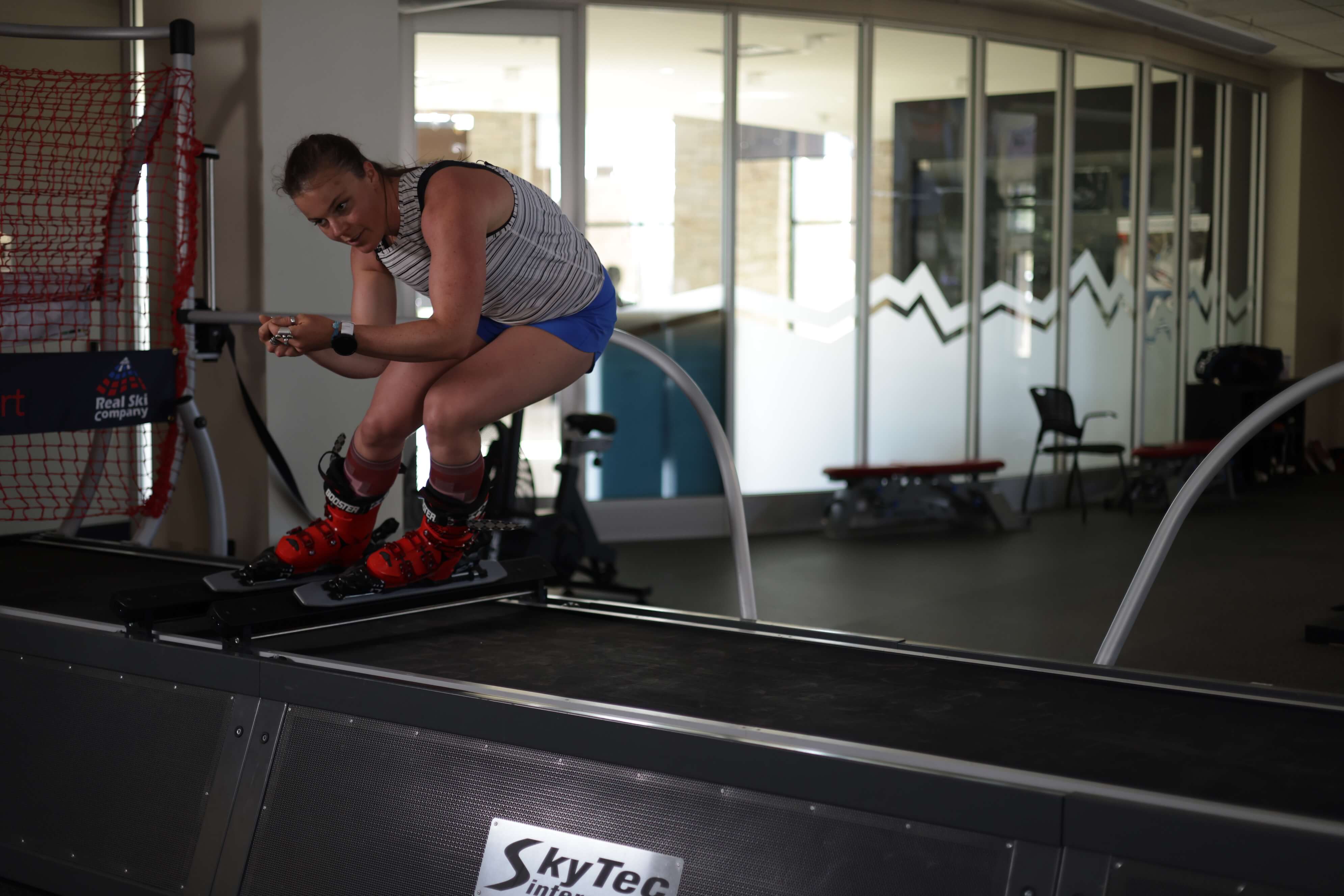
That’s why many skiers train on the SkyTechSport Ski Simulator to combine:
Instead of just training muscles, you train how those muscles work together while skiing.
For best results:
Consistency matters more than intensity.
Most people wait until winter to get ski shape.
That means the first few days become conditioning days instead of fun days.
Train these muscles in advance and you’ll:
The best ski workouts don’t just build legs—they train the exact muscles and movement patterns skiing demands.
Use these 10 exercises year-round, and if you want to take ski-specific training even further, sessions on the SkyTechSport Ski Simulator can bridge the gap between gym fitness and real on-snow performance.